Your Pan Already Made the Sauce

The sauce is already in the pan. After you sear a steak or a chicken breast, the brown bits stuck to the bottom are concentrated flavor, and they turn into a sauce in about five minutes. No recipe to memorize, no extra pan to wash. Deglaze, reduce, butter. That is the whole method, and once you have it, you will never serve a bare piece of meat again.
What a pan sauce actually is
Those brown bits have a name: fond. They are proteins and sugars from the meat, browned by the Maillard reaction and stuck to the metal. Fond is not burnt. Burnt is black and bitter. Fond is brown, and it tastes like the meat, only more so.
Liquid dissolves fond. That is the whole trick. Pour wine or stock into the hot pan, scrape the bottom, and the brown layer lifts off and becomes the sauce. Everything after that is seasoning and texture.
The brown stuff stuck to the pan is not a mess to clean. It is the sauce.
The 5-minute method
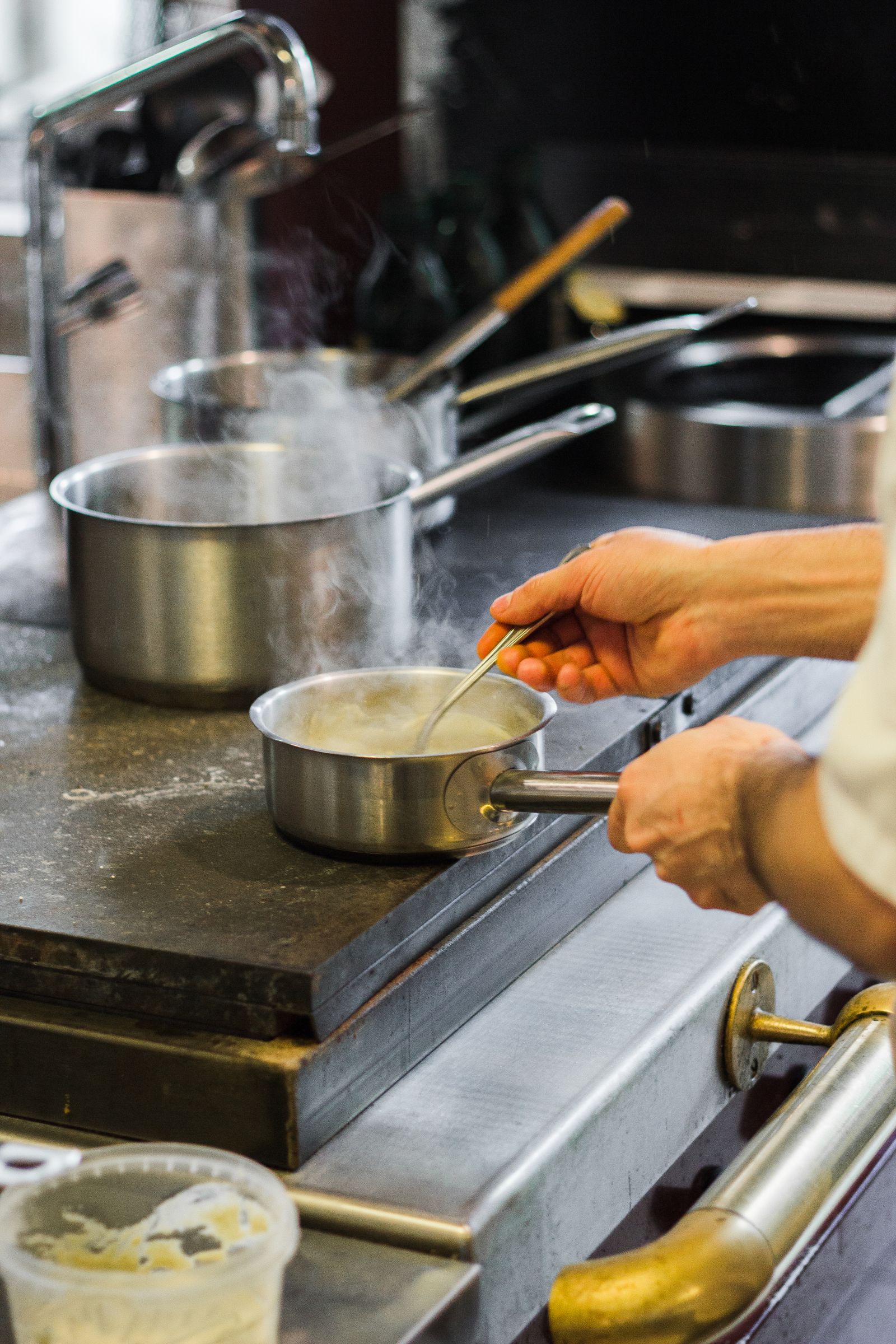
1. Sear your meat, then take it out of the pan and let it rest. Leave the pan on the heat. Do not wash it. 2. Pour off all but a spoonful of fat. Too much fat and the sauce turns greasy. 3. Shallot or garlic, 30 seconds, just until fragrant. Do not brown it. 4. Deglaze. Half a cup of wine, stock, or water. It will hiss and steam. Scrape the bottom with a wooden spoon until the brown bits lift. 5. Reduce by about half, 2 to 3 minutes, until it coats the back of a spoon. 6. Off the heat, whisk in a knob of cold butter, a piece at a time, until the sauce turns glossy. 7. Taste, then salt. Season at the end, because reducing concentrates salt. 8. Spoon it over the rested meat.
That is eight steps and five minutes. The meat rests while the sauce happens, so dinner is not a minute later than it would have been.
What to deglaze with
Wine, stock, and water all work, and they do different jobs.
Dry white wine is for chicken and pork. It brings acid and a little fruit, and the acid cuts the fat. Red wine is for beef. Stock is the workhorse: it adds body and savory depth, and it never fights the meat. Water works fine when the fond is strong. It just frees the brown bits and lets them speak. Brandy or Cognac is the steakhouse move, and it is the base of a steak au poivre sauce.
A splash of vinegar or lemon juice at the end is not the deglazing liquid. It is the acid finish, a squeeze to wake the sauce up after the butter goes in.
The butter finish
The last step has a French name, monter au beurre, and it is the difference between a sauce and a puddle. Cold butter, whisked in off the heat, emulsifies into the reduced liquid instead of melting into grease. The sauce turns glossy, it coats a spoon, and it clings to the meat instead of running off.
The two rules are cold butter and off the heat. If the pan is still boiling when the butter goes in, the emulsion breaks and you get greasy liquid with butter floating on top. Take the pan off the burner, drop in a tablespoon of cold butter, whisk until it disappears, then another if you want it richer. One to two tablespoons is enough for half a cup of sauce.
The pan matters
Stainless steel is the pan for this. Fond sticks to stainless, and that sticking is the whole point. A stainless skillet builds the brown layer a pan sauce needs.
Nonstick gives you nothing to deglaze. The meat slides around, nothing sticks, and there is no fond to dissolve. Cast iron works, but the seasoning and the fond compete a little, and a long wine reduction can strip seasoning. Enameled cast iron is fine. If you seared in nonstick, you can still make a sauce, but you are starting from zero, so build it with stock and butter and call it a butter sauce, not a pan sauce.
Three sauces from the same method
Once you have the method, the variations are one swap each.
Mushroom: sliced mushrooms into the fat first. Brown them properly, then shallot, then deglaze with white wine and stock. Finish with butter and thyme.
Mustard: deglaze with white wine and stock, then whisk in a spoonful of Dijon before the butter goes in. It is sharp, creamy, and it loves pork and chicken.
Red wine: shallot, red wine, reduce by two thirds. Add stock, reduce again, then butter. This is the steak sauce, and it is the one to learn first if you cook beef.
What not to do
Do not wash the pan. That brown layer is the sauce, and the sink is where flavor goes to die.
Do not drown it. Half a cup of liquid is enough. More liquid means more reducing, more waiting, and a sauce that tastes diluted.
Do not boil the butter in. Off the heat, cold butter, whisk. Boiling breaks the emulsion.
Do not salt early. Reduction concentrates salt, so a sauce salted at the start comes out too salty at the end. Salt after the butter, then taste.
Do not use a nonstick pan and wonder where the flavor went. The flavor was the stuff that never stuck.
Five minutes, one pan, no recipe. The fond does the work.
The short version
Sear, rest the meat, deglaze the fond, reduce by half, mount with cold butter off the heat, salt at the end. Five minutes, one pan, and the sauce is the reason the plate tastes like a restaurant.
Questions and answers
How do I make a pan sauce in 5 minutes? Sear the meat and take it out to rest. Deglaze the hot pan with half a cup of wine or stock, scrape up the brown bits, reduce by about half, then whisk in cold butter off the heat. Salt at the end.
What is fond? Fond is the layer of browned proteins and sugars stuck to the pan after searing. It is concentrated flavor from the Maillard reaction, and dissolving it in liquid is what makes a pan sauce.
Can I make a pan sauce in a nonstick pan? Not really. Nonstick does not build fond, so there is nothing to deglaze. Use stainless steel, which is made for this, or enameled cast iron.
What liquid is best for deglazing? Dry white wine for chicken and pork, red wine for beef, stock for body, water when the fond is strong enough on its own. Brandy or Cognac is the classic steakhouse choice.
Why cold butter, and why off the heat? Cold butter whisked in off the heat emulsifies into the sauce and makes it glossy. If the pan is still boiling, the emulsion breaks and the butter separates into grease.
Can I make a pan sauce ahead of time? It takes five minutes, so there is no reason to. It thickens as it cools and reheats poorly. Make it while the meat rests and serve it right away.
Tools for this post: 12-inch stainless skillet. See all the tools I use on my Chef Recs page.
As an Amazon Associate I earn from qualifying purchases. Some links are affiliate links, and I may earn a commission if you buy through them, at no extra cost to you.
Andres Dangond is an executive chef and culinary consultant whose twenty years cover every corner of the industry: trained at Alinea and L2O in Chicago, chef owner of Alvecino in Bogotá, executive chef and partner at The Cut in Orange County, expedition cooking in the Alaskan wilds, and nearly a decade as Executive Chef and Director of Culinary Development at Lynx Grills under Middleby, alongside serving as the U.S. Brand Ambassador for Josper. He has spent twenty years in professional kitchens, from Alinea in Chicago to a decade running culinary development at Lynx Grills, and he still makes the sauce in the same pan as the sear.


Comments