Why Your Steak Sticks to the Grill, and How to Stop It

Direct answer: A steak sticks to the grill because raw protein bonds to metal on contact. That bond is normal, and it is temporary. Once a crust forms, the steak lets go on its own. So the fix is not one trick. It is a sequence: a clean, fully preheated grate, a dry steak that has been lightly oiled, and then patience. Lay it down, leave it alone, and let the crust do the releasing. Forcing it early tears the crust off and leaves it stuck to the grate.
Why it sticks in the first place
When raw meat hits hot metal, its surface proteins unfold and grab the grate. That grab is strongest in the first moments, before browning has built a solid crust between the meat and the metal. As heat works through the surface, the proteins set, the crust firms up, and the bond weakens. The steak releases when the crust is ready, not when you decide it should be ready.
This is not a steak-only problem. The same protein bond happens with chicken, fish, and any other protein on a grate. The mechanism is the same, and so is the fix. What changes is how delicate the food is, and how much tearing you can afford before the crust sets. A thick steak forgives a little impatience. A fish fillet does not.
Sticking is also not proof that your grill is broken, or that you bought the wrong grate. A clean grate, a dirty grate, cast iron, stainless, all of them will grab raw protein at first contact. The difference is what you do in the minutes before and after the steak lands.
The wet problem is the food, not the grate
A fully preheated grate is not wet. Heat drives surface moisture off the metal long before food goes down. So if you are chasing a wet grate, you are chasing the wrong surface.
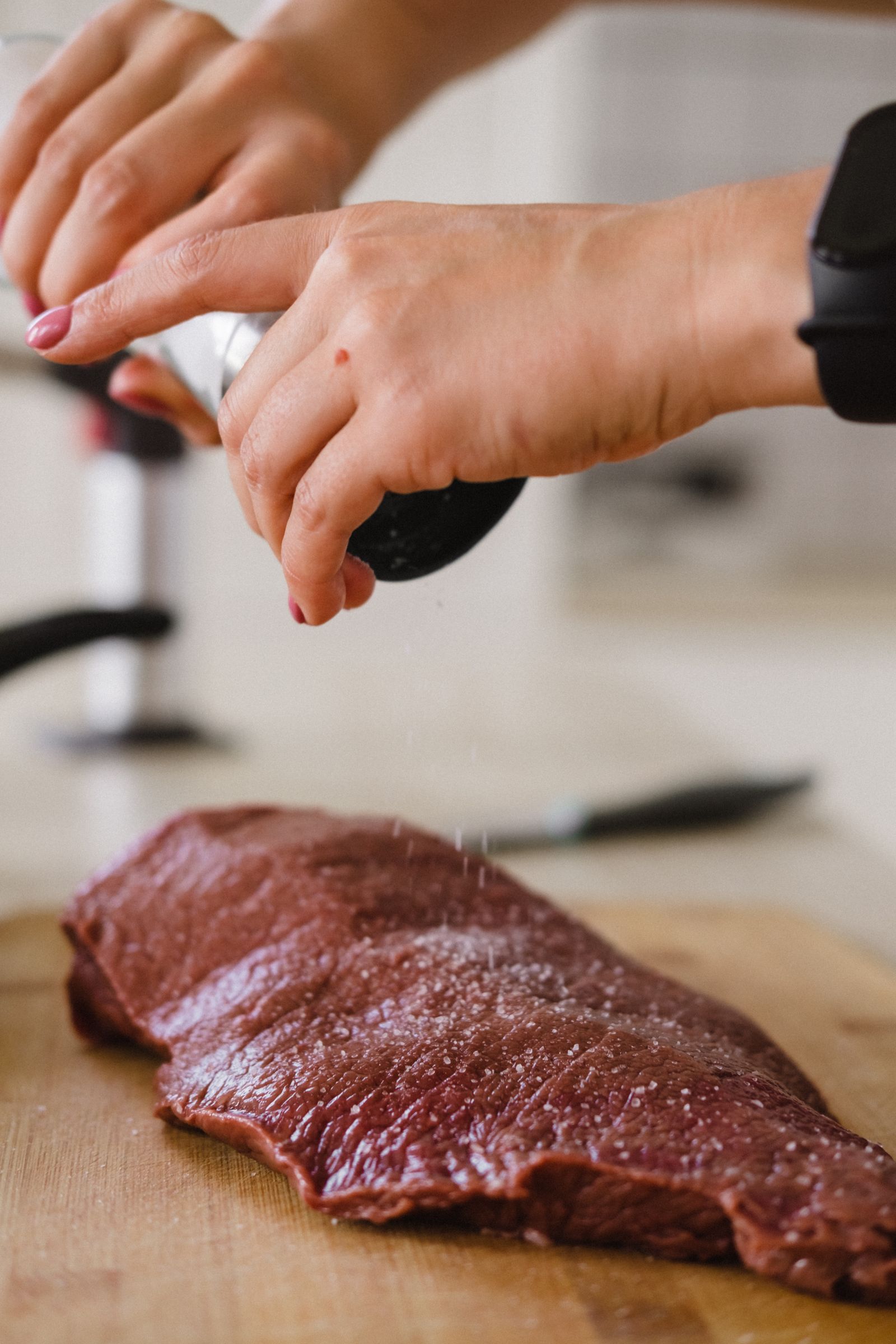
The surface that matters is the steak. A wet steak steams instead of searing. Steam delays browning, and while browning is delayed, the protein bond holds longer. That is why a steak that went on dripping will sit there, stuck, while a dry steak from the same grill releases cleanly.
Pat the steak dry with paper towels before it goes anywhere near the heat. That step alone changes the outcome more than most people expect. Dry surface, fast browning, crust forming on schedule, release on schedule.
Then oil the food, not the grate. A light coat of oil on the steak gives the surface an even, hot contact layer the moment it lands, and it helps the crust form instead of the meat fusing straight to dry metal. The steak should be dry, then oiled. Not wet, not swimming in oil. Just a light, even coat.
Do not oil the grate, especially not with a paper towel
I do not oil grill grates, and I would not recommend it as a routine. The common version of this advice, an oiled paper towel held in tongs and wiped across a hot grate, is the version to avoid. A paper towel soaked in oil over open flame or a ripping hot grate can ignite, and a burning towel in your hand over a grill is a fire hazard, not a technique.
There is also no need for it. If the grate is clean and fully preheated, and the food going on it is dry and lightly oiled, you already have the contact layer where it belongs: on the food. Oiling the grate adds risk without adding a step the food cannot do better on its own.
Brush the grate clean while it is hot, before food goes down. Old carbon, burnt sauce, and yesterday's residue are rough contact points that grab meat and add bitter flavor. A clean grate is part of the sequence, and it is the safe part. Cleaning is not oiling, and the two should not be confused.
The sequence that works at home
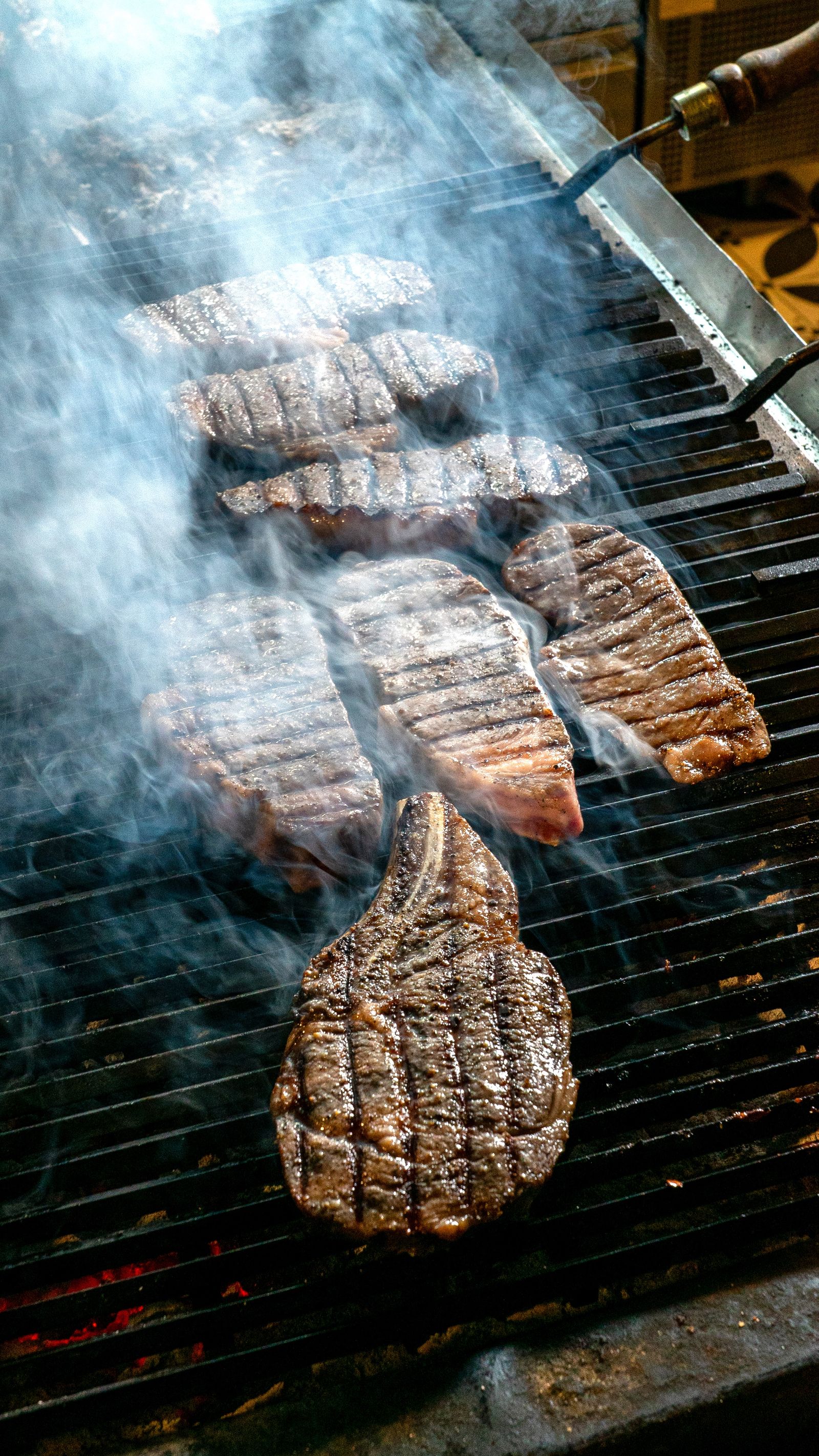
1. Preheat the grill fully, with the lid closed, until the grate is genuinely hot all the way across, not just hot in the middle. A half-heated grate gives you a half-formed crust. 2. Brush the hot grate clean. Get the old residue off while the heat makes it easy to remove. 3. Pat the steak dry, all over. Then oil the steak lightly. Season as you normally would. I covered the pepper part of this in the black pepper post: salt before cooking, pepper after the sear or in the sauce, never fine pepper into a hard sear. 4. Lay the steak down and do not touch it. Do not slide it, do not press it, do not lift it to check every thirty seconds. Let the crust form. 5. Test it with a gentle lift at one corner. If it resists, give it another minute. Resistance is information, not a failure. It means the crust is not ready yet. 6. When it releases, it releases. Flip it once, and let the second side go through the same process.
That is the whole system. Hot, clean, dry, oiled food, wait for release. Every shortcut I see at demos skips one of those words, and every stuck steak I see can be traced back to the skipped word.
If it is truly stuck
First, check whether it is stuck or just not ready. Give it another minute on a clean, hot grate with a dry, oiled steak, and test again with a gentle lift at the corner. Most so-called stuck steaks are just unfinished crusts.
If it is genuinely fused, do not scrape under it with a spatula and tear the crust off. Lift from below, gently, between the grate bars, and let the crust come with the meat instead of staying on the metal. The goal is still the same: keep the crust you built. A torn crust is not just ugly. It is the flavor and texture you were searing for in the first place, left behind on the grate.
What does not fix it
More oil on a dirty or cool grate. Oil does not clean a grate, and it does not replace heat.
A sugary sauce or marinade early. Sugar burns, carbons onto the grate, and creates a new sticky layer that grabs the next piece of food too.
Crowding the grate. Meat packed edge to edge steams in its own moisture, which is the wet surface problem again, just made by quantity instead of by a dripping steak.
Pressing the steak down. Pressing squeezes juices out, cools the contact surface, and does nothing to speed up crust formation. It just makes a drier steak that is still stuck.
Questions I get about sticking
Is it the grate material? Material matters less than condition and heat. A clean, fully preheated grate of any common type will release a dry, oiled steak once the crust forms. A dirty or half-heated grate will grab it no matter what it is made of.
Should I oil the steak or the grate? Oil the steak. A light coat on dry food gives you the contact layer where it is needed, without putting an oiled towel over flame. That is also the safer way to do it at home.
Why did it stick last time but not this time? Check the sequence, in order: was the grate fully preheated and clean, was the steak patted dry, was it lightly oiled, and did it get left alone until it released? One skipped step is usually enough to explain the difference. The grill did not change. The sequence did.
Does this apply to chicken and fish too? Yes, the protein bond is the same. Fish is simply less forgiving, because its crust is thinner and tears more easily, so the patience part matters even more. Do not rush a fillet that is still holding on.
---
A steak that sticks is usually a steak that was rushed, wet, or put on a grate that was not ready for it. Fix the sequence and the grill stops fighting you. Hot, clean, dry, oiled food, wait for release. That is the same discipline as running a flat top in zones, which I broke down in the flat top post: control comes from preparing the surface and the food before the heat, not from forcing things once they are already on it.
About the author
Andres Dangond is an executive chef and culinary consultant whose twenty years cover every corner of the industry: trained at Alinea and L2O in Chicago, chef owner of Alvecino in Bogotá, executive chef and partner at The Cut in Orange County, expedition cooking in the Alaskan wilds, and nearly a decade as Executive Chef and Director of Culinary Development at Lynx Grills under Middleby, alongside serving as the U.S. Brand Ambassador for Josper. He consults on menu and recipe development, trains chefs and owners on cooking equipment, and works as a demo and event chef for equipment brands nationwide.


Comments