Your Frozen Steak Cooks Better Than Your Thawed One

Tempering helps a little. It is not the difference between a good steak and a bad one. And the bigger surprise from the testing is that a steak cooked straight from frozen beat a thawed steak in a blind taste test. If you forgot to thaw, you did not ruin dinner. You might have improved it.
Tempering: what the tests actually show
The advice is everywhere: take the steak out of the fridge 30 to 60 minutes before cooking so it cooks evenly. The logic sounds right. A cold center takes longer to heat, so the outside overcooks while the inside catches up.
When people actually test it, the difference is small. Chris Young cooked tempered and fridge-cold steaks side by side with Andy Hearnden and compared the gray band and the flavor. The gray bands were almost identical. The tempered steak came out slightly juicier and a little beefier, but the margin was small, and skipping tempering did not ruin dinner.
Kenji Lopez-Alt reached the same conclusion in his Food Lab testing: letting a steak sit at room temperature has little impact on the finished steak. That matches what I do in my own kitchen. I rarely temper. If I have time, the steak sits out while I get the grill going. If I do not, it goes on cold and cooks just fine.
Tempering helps a little. It is not the difference between a good steak and a bad one.
There is one real limit. Do not leave meat out for more than two hours. That is the USDA line for food safety, and the outside of the steak reaches room temperature long before the center does. Thirty to sixty minutes is plenty. Past two hours, put it back in the fridge.
The frozen steak test
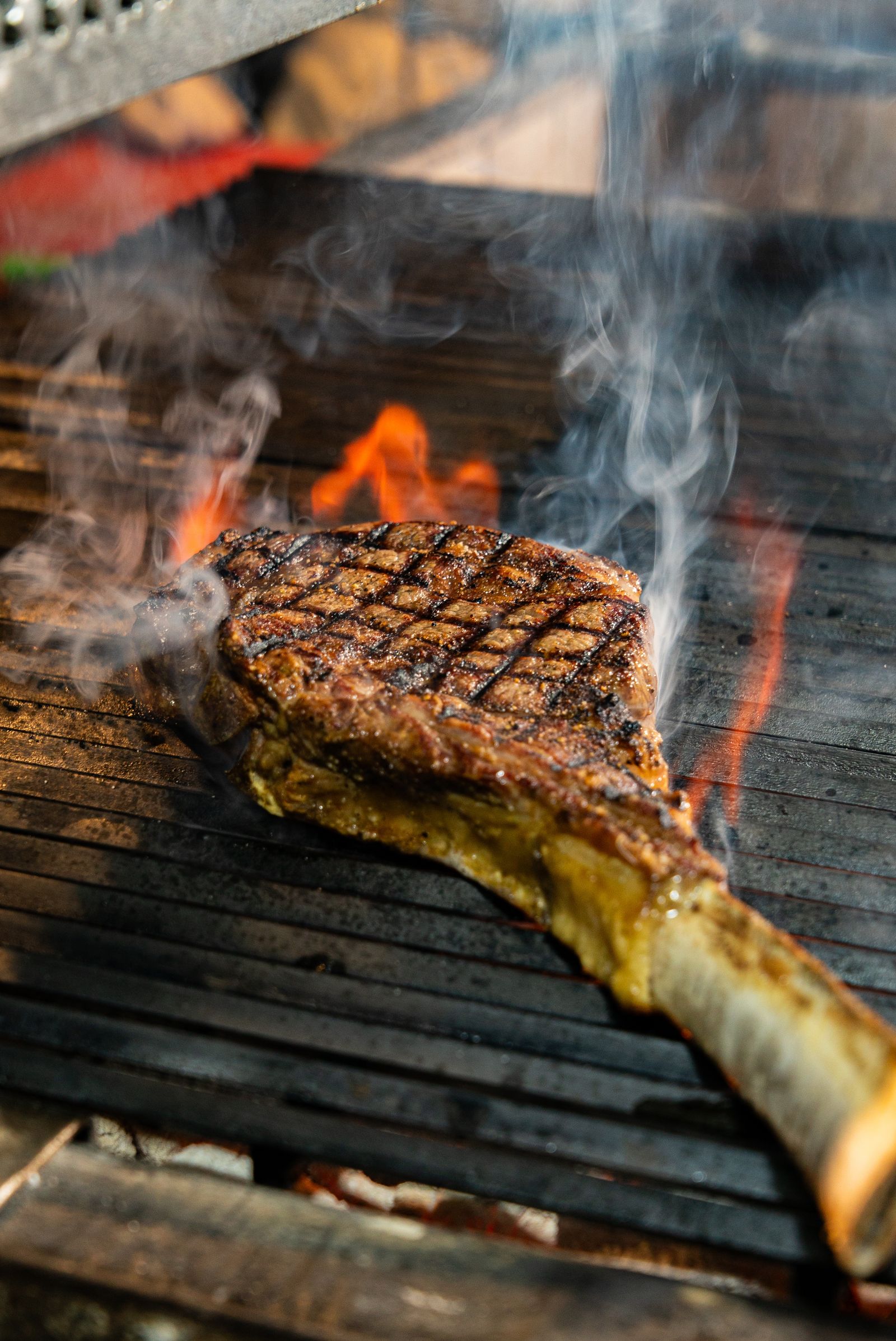
Here is the result nobody expects. Cook's Illustrated editor in chief Dan Souza cut strip steaks in half, froze one half of each, and thawed the other half overnight in the fridge. Both sets were seared in a hot skillet for 90 seconds a side, then finished in a 275 degree oven until they hit 125 degrees, medium-rare.
The frozen steaks took longer in the oven, 18 to 22 minutes against 10 to 15 for the thawed ones. But they browned just as fast, they came out with a thinner band of gray, overcooked meat under the crust, and they lost about 9 percent less moisture during cooking. When tasters tried both without knowing which was which, they unanimously preferred the steaks cooked from frozen. Not a split decision. Unanimous.
The science is the same idea that makes tempering a small deal, running in the other direction. A frozen steak is so cold inside that its surface can reach the high temperatures browning needs before the interior overcooks. The cold center is a buffer. The thawed steak has no buffer, so more of its edge overcooks while the center catches up.
Souza himself adds the honest caveat: the perfect steak is one that was never frozen at all. Frozen beats thawed, not fresh. If you have a fresh steak, cook it fresh. But if the steak in your freezer is what you have, thawing it first is not doing it a favor.
How to cook a steak from frozen
The method matters. You cannot just throw a frozen steak on a screaming hot grill and hope. It needs two kinds of heat: hard and fast for the crust, then gentle for the interior.
In a pan, pour about an eighth of an inch of neutral oil into a skillet and heat it until it shimmers. Sear the frozen steak about 90 seconds a side until it is browned, then move it to a 275 degree oven on a rack over a sheet pan until the center hits your target temperature. For medium-rare, pull it at 125 degrees and let it rest. A one inch steak takes about 18 to 20 minutes in the oven. A dry surface and a hot pan are what keep the steak from sticking.
On the grill, use a two-zone fire, one side hot and one side cool. Sear the frozen steak over the hot side until it is deeply browned all over, about five minutes a side, then move it to the cool side and let the interior come up to temperature slowly. Rest it five minutes before slicing.
A thermometer is not optional here. Cooking times from frozen vary more than from thawed, and guessing is how a frozen steak ends up raw in the middle or gray all the way through. I use the MEATER Plus when I cook from frozen because it tracks the climb from the inside while the steak is still on the heat, and the ThermoMaven instant-read thermometer for a fast check before I pull it.
Two details make it work. First, the steak has to be thick, at least an inch. Thin steaks like flank and skirt overcook from frozen because there is not enough interior to stay cold while the outside browns. Second, freeze the steak flat. Lay it uncovered on parchment on a sheet pan until it is solid, then wrap it tight and bag it. A flat steak sits evenly on the heat, and freezing it uncovered first drives off surface moisture, which means less splatter in the pan.
The steak you forgot to thaw cooks better than the one you thawed.
What about salt?

Salt will not stick to a frozen surface. There is nothing for it to dissolve into, so it falls off. Salt the steak before you freeze it, the way Kenji does, or season it once the surface has thawed in the pan after the first sear.
For a thawed or fresh steak, my rule is simple: salt at least 10 minutes before cooking. At 10 minutes the salt has dissolved into the moisture it drew out and started moving back into the meat, so the seasoning is working inward instead of sitting dry on the surface. That is the same rule in my Sear Rules guide, and it is the one I actually follow at home. Pepper goes on after the sear, never before the heat.
When to thaw instead
Frozen is not the answer for everything. Thin steaks overcook, as above. Anything you want to marinate has to thaw first, because a marinade cannot soak into a frozen surface. And Wagyu is the exception: its marbling starts melting at room temperature, so thaw it in the fridge for up to a day before cooking.
The USDA is clear that cooking from frozen is safe in the oven, on the stove, or on the grill, and that it takes about 50 percent longer than cooking thawed. The extra time is the only real cost, and the test results say you get it back in evenness and juiciness.
The short version
Tempering is a small help, not a requirement. I rarely bother. A cold steak cooks well, and a frozen one, cooked the right way, cooks better than a thawed one. Salt 10 minutes before cooking, use a thermometer, and give a frozen steak a thick cut, a hot sear, and a gentle finish. The steak you forgot to thaw is not a problem. It is a head start.
Questions and answers
Do I need to let a steak come to room temperature before cooking? No. Tests from Chris Young and Kenji Lopez-Alt show tempering makes only a small difference. A fridge-cold steak cooks well. Do not leave it out longer than two hours.
Is it safe to cook a steak from frozen? Yes. The USDA says it is safe to cook meat from frozen in the oven, on the stove, or on the grill, and that it takes about 50 percent longer than thawed.
Does a frozen steak really cook better than a thawed one? In Cook's Illustrated testing, yes. Frozen steaks browned just as fast, had a thinner gray band, lost about 9 percent less moisture, and tasters unanimously preferred them. The one caveat is that a never-frozen steak is still best.
What is the best way to cook a steak from frozen? Sear it hard first, then finish gently. In a pan, sear about 90 seconds a side in hot oil, then finish in a 275 degree oven until the center hits your target. On the grill, sear over the hot side, then move to the cool side. Use a thermometer.
Can I cook a thin steak from frozen? Not well. Thin steaks like flank and skirt overcook from frozen. Use a steak at least an inch thick.
Should I salt a frozen steak? Salt it before freezing, or season it after the surface thaws in the pan. Salt will not stick to a frozen surface.
Tools for this post: MEATER Plus smart meat thermometer, ThermoMaven instant-read thermometer and Stainless steel tongs. See all the tools I use on my Chef Recs page.
As an Amazon Associate I earn from qualifying purchases. Some links are affiliate links, and I may earn a commission if you buy through them, at no extra cost to you.
Andres Dangond is an executive chef and culinary consultant whose twenty years cover every corner of the industry: trained at Alinea and L2O in Chicago, chef owner of Alvecino in Bogotá, executive chef and partner at The Cut in Orange County, expedition cooking in the Alaskan wilds, and nearly a decade as Executive Chef and Director of Culinary Development at Lynx Grills under Middleby, alongside serving as the U.S. Brand Ambassador for Josper. He rarely tempers a steak, salts 10 minutes before cooking, and cooks from frozen whenever the freezer is what dinner is coming from.


Comments