What a Demo Chef Actually Does at a Trade Show

Direct answer: A demo chef's job is to make equipment sell by cooking on it, live, in front of people who are deciding whether to buy it, stock it, or recommend it. The cooking is the visible part. The actual work starts weeks earlier: choosing a menu that proves what the equipment does, planning quantities and timing for a floor that never stops moving, and learning the product well enough to answer a dealer's hardest question while something is searing. On the day, the demo chef is part cook, part teacher, part salesperson who never sounds like one. When it works, a buyer does not remember a pitch. They remember a taste, and the machine that made it.
The menu is an argument, not a meal
Nobody at a trade show needs lunch. Every dish a demo chef serves is there to prove a specific claim about the equipment, and the menu gets built backward from those claims.
If the point is heat, something has to sear hard and fast, in front of people, with the crust to show for it. If the point is control, something delicate has to cook gently on the same equipment an hour later. If the point is range, the menu has to travel: the brands I have worked with cook on far more than grills, so a good demo day might move across a grill, a flat top, a pizza oven, and a range, with each stop showing a different capability instead of repeating the same trick.
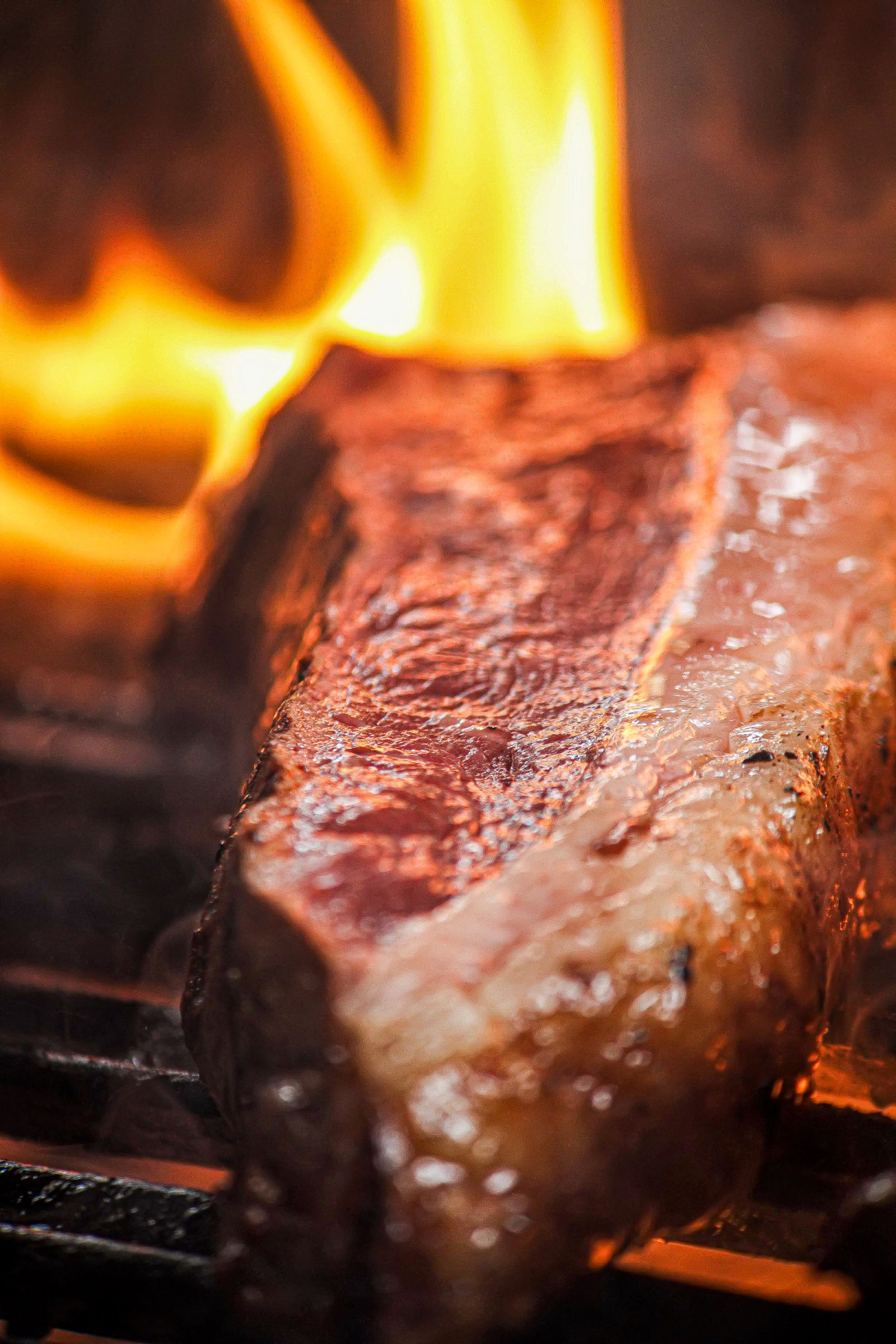
Portioning is part of the argument too. Demo food is built in small tastes, cooked in continuous small batches, so that the hundredth person at the booth gets food as fresh as the first person did, and so the equipment is almost always running with something on it. A demo station that sits idle and cold between performances sells nothing. The cooking has to look, sound, and smell like it never stops, because on a show floor, smell is the first invitation and an empty station is a closed door.
The floor work nobody sees
A trade show floor is a kitchen with none of the infrastructure. Everything a restaurant takes for granted, water, refrigeration, prep space, a place to put a hot pan down, has to be planned, brought, or improvised inside a booth footprint that was drawn for displays, not cooking.
So the demo chef's day starts before the doors open: equipment checked and lit, surfaces at temperature, prep laid out in the order it will be used, backup product cold and close, and a plan for what happens when a crowd gathers all at once, which is always when the equipment question you did not expect arrives. During the show there is no stepping away. You cook in short cycles, talk while you cook, plate while you talk, and watch the crowd while you plate. The people who stop are not an audience. They are buyers, dealers, designers, and owners, each listening for a different thing, and part of the job is hearing which one is in front of you and answering that person, not the crowd in general.
Cleanup is also part of the job, and it is not invisible. How an exhibitor's station looks at 4 PM tells the floor something about the brand. A station that still looks clean and under control at the end of a long day is its own piece of salesmanship.
Talking like a chef, not a brochure
This is the part brands actually hire for, and it is the part that cannot be faked with a script.
A spec sheet can tell a buyer the burner output. It cannot tell them what that output does to a thick steak in the third minute, why a French top changes how a sauce service runs, or what ownership feels like after the first year. A demo chef who has cooked on the equipment for years answers those questions from use, not from training material, and buyers can hear the difference immediately. Dealers can too, and dealer confidence matters as much as the end buyer's, because the dealer is the one who keeps recommending the product after the show ends.
That is also why a large part of the job happens away from the grill entirely: training. Brands use demo chefs to teach their own sales teams and dealers to talk about the product the way a chef does, which is the way buyers believe. A salesperson who has watched the equipment cook, tasted what came off it, and learned where its real strengths are sells differently from one who has only read about it. Building that confidence, in a showroom evening or a dealer training day, is demo work just as much as the public performance is.
It is not only grills, and not only trade shows
The title says trade show because that is the most visible stage, but the same work shows up in several rooms:
Showroom events, where the crowd is smaller, the questions are deeper, and the cooking has to carry an evening, not a moment.
Dealer trainings, where the audience sells the equipment for a living and can spot a rehearsed answer instantly.
Product launches, where the food has to introduce something nobody has cooked on before and make its case in one taste.
Content and recipe work, where the demo continues after the event: recipes built around the equipment, and photo and video shoots where the food has to look like what the equipment actually produces. I spent years inside a marketing department directing those shoots, and it changes how you cook on camera and on the floor. Nothing gets plated that the home cook could not reproduce, or the content stops being believed.
The equipment changes across all of it. Across the Middleby residential portfolio and my years at Lynx, I cooked on pizza ovens, flat tops, ranges and ovens, and French top ranges from La Cornue and Viking, not only grills. A demo chef who can only run one category is a specialist. Most brands need someone who can walk the whole line and cook honestly on all of it.
Why brands hire this instead of staffing it
A brand can send its own team, and the good ones do, for the product knowledge. What an outside demo chef adds is a working chef's credibility with exactly the people the brand needs to convince. I spent nearly a decade as Executive Chef and Director of Culinary Development at Lynx Grills under Middleby, doing this work from the inside: demos, trade shows, dealer training, and product development across the residential portfolio. Brands still hire me back for their events, and I do recurring recipe and video work for Wildfire Outdoor Living. That hire-back pattern is the real reference. A brand does not rebook a demo chef whose cooking did not move product.
There is also a practical reason. Events are spiky. A brand needs a trade show floor run at full level for three days, a showroom series for a season, a launch cooked once and cooked perfectly, and then nothing until the next one. Hiring that capacity per event, from someone who already knows the equipment and the dealer world, costs less than carrying it and lands better than training it from zero each time.
How to get the most out of hiring one
If you are a brand planning an event, three things decide whether the demo works:
Bring the chef in before the menu exists. The menu is where the equipment's case gets made. A chef who helped choose what to cook can defend every dish. A chef handed a menu on the day can only execute it.
Say who the floor is for. A dealer-heavy show, a designer event, and a consumer show are three different conversations that happen to use the same grill. The cooking plan, the talk, and even the portioning change with the answer.
Let the chef cook real food. The temptation at shows is spectacle: the biggest cut, the tallest flame. Spectacle photographs well and convinces nobody who cooks. Food that a buyer can picture making at home, made visibly well on your equipment, is what they repeat to their spouse, their client, or their sales team on Monday.
Questions brands ask me about demo work
How far ahead should we book? As early as the event date exists. The cooking is the last part; menu planning, product quantities, and the training pieces all sit in front of it, and they are what make the floor day look effortless.
Do you only demo grills? No. Grills are where I spent the Lynx years, but the portfolio work covered pizza ovens, flat tops, ranges and ovens, and French tops, and events with no grilling at all are a normal part of this work.
Can one booking cover cooking and sales training? Yes, and it usually should. The same knowledge that runs the demo is what the sales team needs, and hearing it while the food is in front of them is how it sticks.
Will you travel? Yes, nationally, for events, trade shows, and launches. This work has always been a travel job.
---
A demo chef is the person standing between a machine and the moment a buyer believes in it. The cooking has to be excellent, but excellent cooking alone is catering. The job is the menu built as an argument, the floor run like a kitchen that happens to have an audience, and a conversation about the equipment that only years of cooking on it can produce. That is the work I did inside the industry for nearly a decade, and it is the work I now do freelance for brands that need their equipment to sell itself, one taste at a time.
About the author
Andres Dangond is an executive chef and culinary consultant whose twenty years cover every corner of the industry: trained at Alinea and L2O in Chicago, chef owner of Alvecino in Bogotá, executive chef and partner at The Cut in Orange County, expedition cooking in the Alaskan wilds, and nearly a decade as Executive Chef and Director of Culinary Development at Lynx Grills under Middleby, alongside serving as the U.S. Brand Ambassador for Josper. He consults on menu and recipe development, trains chefs and owners on cooking equipment, and works as a demo and event chef for equipment brands nationwide.


Comments