Resting Meat Does Not Put the Juices Back

Rest the meat. Just do it for the right reason. Resting does not pull juices back into the center. When testers controlled for final internal temperature, rested and unrested meat lost essentially the same amount of juice. Resting matters because temperature equalizes, internal pressure falls, and carryover cooking finishes the center. Cut it while it is screaming hot and more liquid rushes out.
What most cooks think happens
The rule is passed down like law, let the meat rest so the juices settle back in. The picture in most heads is juice pushed to the center by the heat, then drifting back out to the edges while the meat sits. It sounds neat. It is also wrong, according to the newer testing.
What the tests actually show
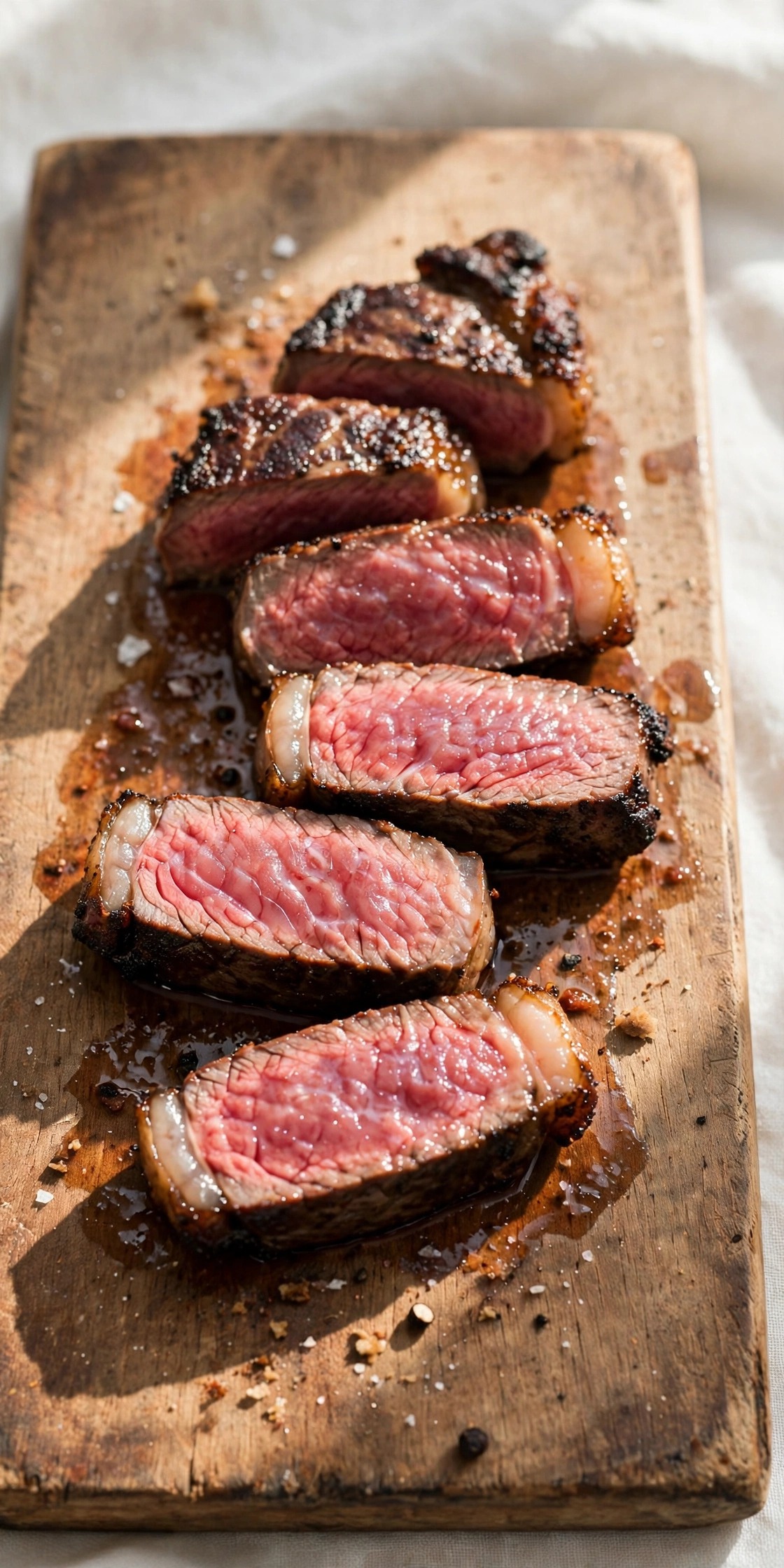
The newer testing is plain: meat resting is not about reabsorbing juice at all. The key factor is temperature and the internal pressure that comes with it. Slice meat while it is screaming hot, and more liquid will rush out. Not because it needs to reabsorb, but because heat increases internal pressure. When testers controlled for final internal temperature, rested and unrested meat lost essentially the same amount of juice. In other words, the benefit of resting is not drawing liquid back in. It is giving the meat time to coast to its target temperature through carryover cooking, so you are not slicing into it while it is still building heat and pressure.
Resting is not about juice coming back. It is about temperature settling down.
Why rest still matters
Pull the meat before it hits your target temperature, let carryover finish it, and do not slice it while it is still building heat and pressure. That is the whole job of the rest.
Pull a steak about 5 degrees below your target. A medium-rare steak pulled at 125 lands at 130. A thick steak cooked hard can climb 10 degrees, because the outside is much hotter than the center, so pull that one at 120. A roast is a different animal. Pull it 10 to 15 degrees below target. A prime rib pulled at 115 to 120 coasts to 130 while it sits. The bigger the cut, the more heat it stores, the further it climbs. I pull a thick ribeye at 115 and watch it land near 130. Same logic on a reverse sear: pull at 120 and let it coast to 130.
A thin steak eaten slice by slice needs less rest than a roast carved all at once. The roast has more heat stored inside it, more carryover to finish, and more to lose if you cut it too soon.
A thin steak needs about 5 minutes. A thick ribeye, closer to 10. My rule of thumb is a third of the cooking time. A roast needs 15 to 30 minutes, at least 15 to 20 for a sirloin tip. How do you know it is ready? Use the thermometer. Rest until the center drops about 5 degrees below its peak. When the number stops climbing and starts to fall, the pressure has fallen and you can slice.
The crust trap
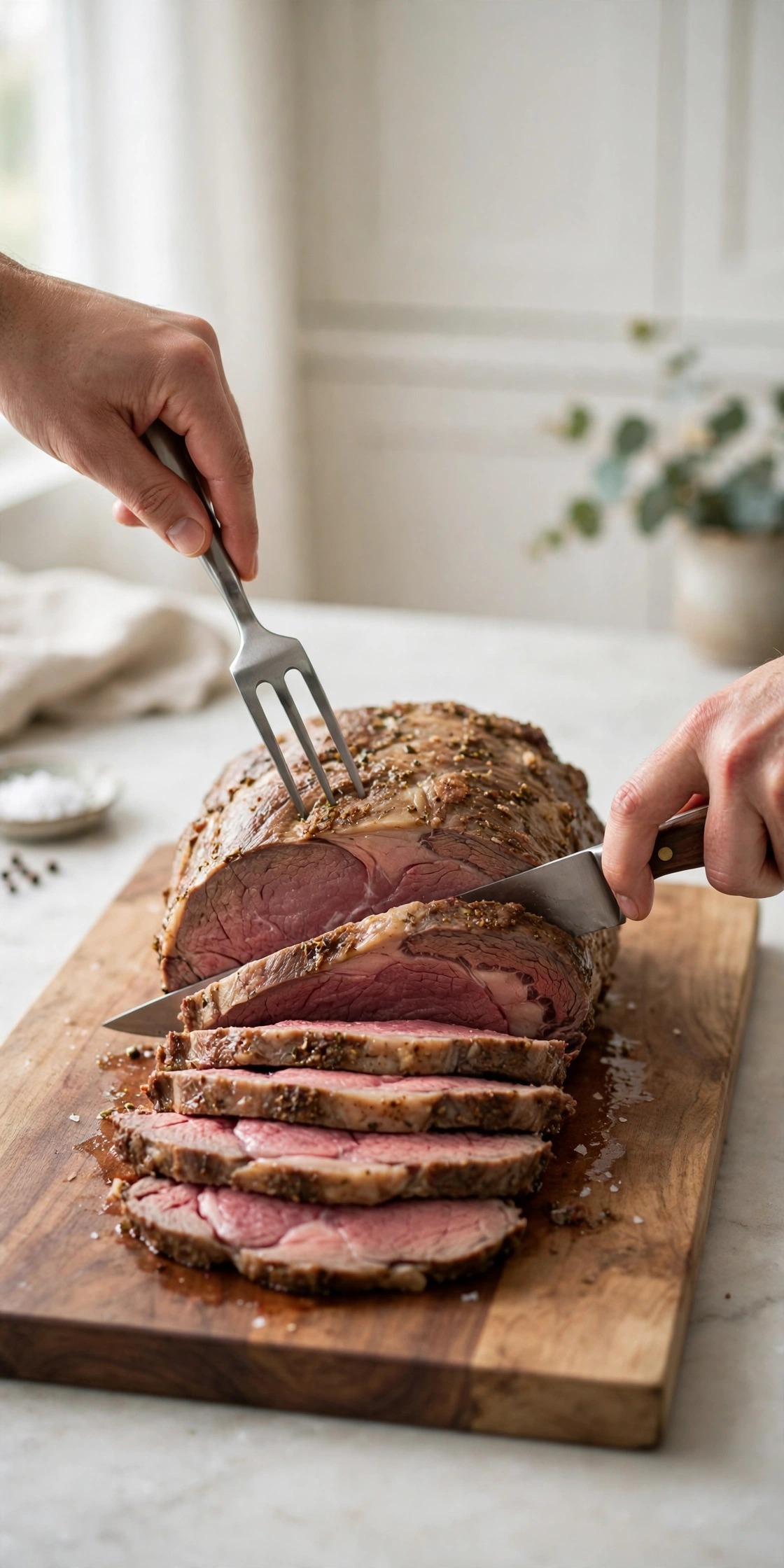
Tenting tight in foil can soften the crust you just built. Foil traps steam, and steam is the enemy of a crisp crust. If you need to hold the meat, hold it loose, uncovered or barely covered, so the crust stays dry while the inside settles.
How to rest without going cold
Resting is a balance. Cut too soon and juice runs out on the board. Wait too long and dinner goes cold. The fix is pulling at the right temperature and resting just long enough for the pressure to fall and the temperature to even out, then slicing and serving while it is still hot.
Picture a prime rib on a carving board. Cut it the second it comes out of the oven and the board floods, the first slices come out gray at the edge and underdone in the middle, and the rest of the roast keeps climbing while you carve. Give it twenty minutes, loose and uncovered, and the slices come off even, the center settled at the temperature you actually wanted. Same thing on a smaller scale with a ribeye off the grill: cut it screaming hot and the plate pools. Give it five minutes and the juice stays in the meat.
The short version
Rest the meat, but for the right reason. Not to put juices back, because they were never coming back. Rest it so carryover finishes the center, pressure falls, and you slice a steak that is done all the way through instead of one that is still climbing. Pull it early, rest it loose, and use a thermometer so you know where it actually landed.
Pull it early, rest it loose, and use a thermometer so you know where it actually landed.
Questions and answers
Should I rest meat after cooking? Yes. Resting lets the temperature settle, carryover finish the center, and internal pressure fall, so you slice a steak that is done all the way through instead of one that is still climbing. Resting works the same whether the steak started fresh or from frozen.
Does resting let meat reabsorb its juices? No. When testers controlled for final internal temperature, rested and unrested meat lost essentially the same amount of juice. The juices were never coming back. Resting helps because the temperature evens out and the pressure falls.
How long should I rest a steak vs a roast? A thin steak needs about 5 minutes. A thick ribeye, closer to 10. My rule of thumb is a third of the cooking time. A roast needs 15 to 30 minutes, at least 15 to 20 for a sirloin tip.
Does tenting in foil help? No. Foil traps steam, and steam softens the crust you just built. If you need to hold the meat, hold it loose, uncovered or barely covered, so the crust stays dry while the inside settles.
What if the meat cools too much while it rests? Pull it at the right temperature and rest just long enough for the pressure to fall and the temperature to even out, then slice and serve while it is still hot. Resting is a balance. Cut too soon and juice runs out. Wait too long and dinner goes cold.
Do I still need a thermometer? Yes. Rest until the center drops about 5 degrees below its peak. When the number stops climbing and starts to fall, the pressure has fallen and you can slice.
Tools for this post: MEATER Plus smart meat thermometer, ThermoMaven instant-read thermometer and Stainless steel tongs. See all the tools I use on my Chef Recs page.
As an Amazon Associate I earn from qualifying purchases. Some links are affiliate links, and I may earn a commission if you buy through them, at no extra cost to you.
Andres Dangond is an executive chef and culinary consultant whose twenty years cover every corner of the industry: trained at Alinea and L2O in Chicago, chef owner of Alvecino in Bogotá, executive chef and partner at The Cut in Orange County, expedition cooking in the Alaskan wilds, and nearly a decade as Executive Chef and Director of Culinary Development at Lynx Grills under Middleby, alongside serving as the U.S. Brand Ambassador for Josper. He has spent twenty years cooking steak in professional kitchens, from Alinea in Chicago to a decade running culinary development at Lynx Grills, and he still pulls every ribeye early and rests it loose.


Comments