Stop Searing Your Black Pepper: It Burns, Turns Bitter, and Loses Everything Good

Direct answer: Black pepper does not belong on a steak before a hard sear. Pepper is a delicate seasoning built on volatile aromatic oils. At searing temperatures those oils flash off in seconds, the fine particles scorch against the hot pan, and what is left is bitterness instead of the citrusy, piney bite you wanted. Salt before cooking. Pepper after, or in the sauce.
What black pepper actually is
A peppercorn is two things. The bite comes from piperine, an alkaloid that makes up roughly 5 to 9 percent of the berry. The aroma, the part that makes fresh pepper smell like citrus peel, pine and flowers, comes from a small dose of essential oils, mainly pinene, sabinene, limonene and caryophyllene. Those oils are the soul of the spice, and they are fragile by design. They are volatile, which means they evaporate easily. That is why a freshly cracked peppercorn smells alive and a tin of pre-ground pepper smells like dust. Grinding starts the clock; heat ends it.
What searing heat does to it
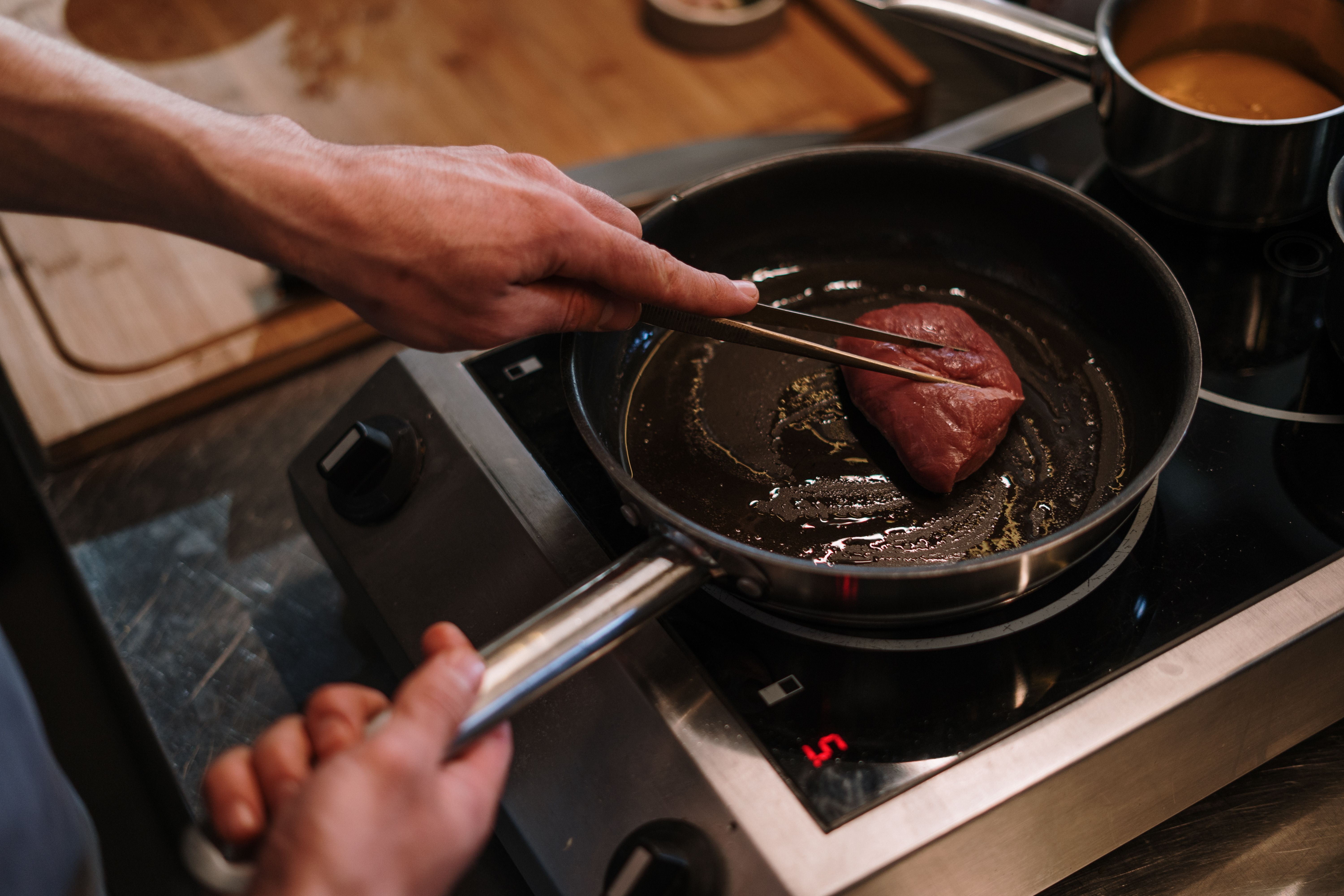
A pan or grill grate for a proper sear runs 450 to 500 °F (230 to 260 °C) at the surface. Hold pepper's chemistry up against that:
The aromatic terpenes boil far below searing heat. Limonene boils at about 349 °F (176 °C), pinene at about 311 °F (155 °C). Pressed against a 500 °F surface, they do not gently warm up. They are gone.
Piperine itself breaks down with sustained heat. In controlled cooking studies, black pepper lost 16 to 34 percent of its piperine just from boiling or pressure cooking, gentle methods that never pass 212 to 250 °F. A ripping hot sear is far more violent than a simmer.
The ground solids scorch. A fine grind has enormous surface area, and tiny dry plant particles against hot metal and fat char fast. Charred pepper reads acrid and bitter on the palate, and it sits on top of the crust you worked to build.
So the standard routine, salt and pepper the raw steak, then sear it hard, gives you the worst of both worlds: the aroma evaporates, the bite weakens, and a layer of scorched dust dulls the crust.
This is the same fight I picked in the case for the well-done steak: a habit everyone copies is not the same as a technique that works.
Why restaurants still do it
Habit, mostly, plus the fact that salt and pepper live in the same hand during service. There is also one legitimate exception worth naming: steak au poivre. A thick crust of coarsely cracked pepper behaves differently. The pieces are large, they char far less than fine dust, and the pepper finishes in a pan sauce, where the heat is gentle and the fat and cream carry the aromatics instead of destroying them. Au poivre is not proof that searing pepper works. It is proof that coarse pepper plus a sauce works. Fine pepper seared dry on a steak is a different thing entirely.
The right way to pepper a steak
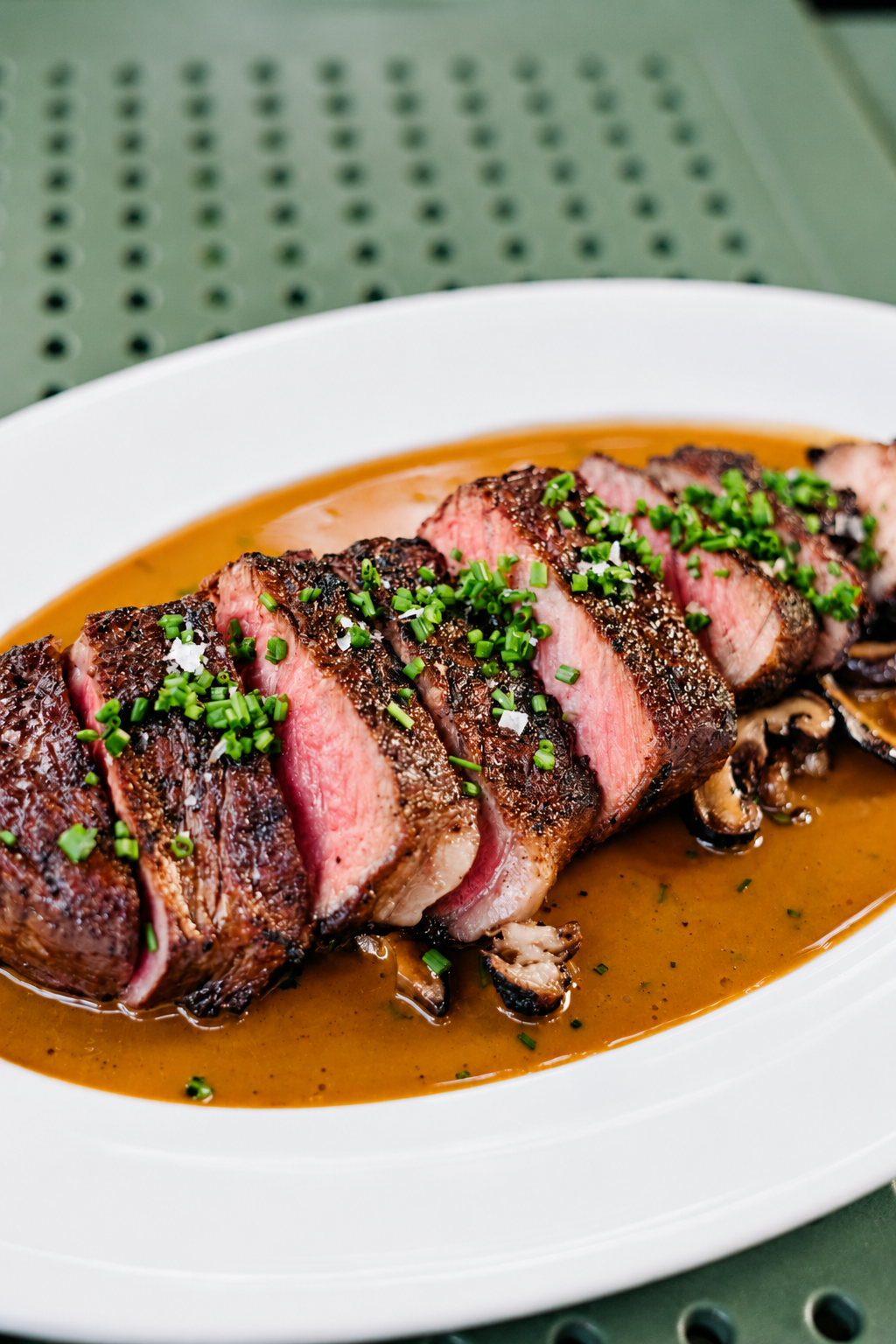
My first recommendation is simple: skip the pepper on the steak entirely and put it in a sauce instead. A pan sauce built in the fond after the sear, with the pepper cracked into the liquid, keeps the pepper near 212 °F, lets the fat carry the aromatics, and gives you every bit of the bite with none of the scorch. That is how pepper on steak is supposed to taste.
The full routine:
1. Salt about 30 minutes before cooking, or right before it goes on the heat. Kosher salt. Salt is a mineral; it does not burn, and 30 minutes is enough time for it to do its work on a steak. 2. Sear the steak with no pepper on it. Build the crust clean. 3. Make the sauce carry the pepper. Deglaze the pan, build your sauce, and crack the pepper into it. Serve the sauce over the sliced steak. 4. No sauce? Then crack fresh pepper over the steak as it rests. The residual heat wakes it up without burning it.
If you must stick to the old habit and pepper the raw steak, use coarse cracked pepper, never fine. Coarse pieces have far less surface area exposed to the pan, they sit in the fat instead of dusting the metal, and they char much more slowly. It is still a compromise, the top aromatics still take the hit, but coarse pepper before the sear is acceptable in a way fine pepper simply is not.
Where black pepper actually shines
Finishing.Fresh cracked over eggs, salads, sliced steak, strawberries, anything where the pepper never meets hard heat.
Sauces.Cacio e pepe toasts cracked pepper briefly in fat, then tames it with pasta water. Carbonara finishes with pepper off the boil. Pan sauces take pepper beautifully because liquid caps the temperature.
Soups and stews.Whole or coarsely cracked peppercorns in a simmer give up their bite slowly into the liquid and fat. This is gentle heat doing useful work, and it is why peppercorns belong in stocks, braises and pozole.
Gentle cooking.Anything poached, steamed or cooked below a hard sear can carry pepper from the start without scorching it.
The rules to keep
Salt by weight and by percentage, not by feel. I use the 1% rule for seasoning anything, and pepper never changes that math; it just changes when it goes on.
Buy whole peppercorns. Pre-ground pepper has already lost most of its aromatic oils before it reaches your kitchen.
Grind coarse for cooking, and grind at the last moment. Fine dust burns fastest and disappears first.
Treat pepper like a fresh herb, not like salt. Salt is geology. Pepper is produce.
If a dish will see a ripping hot surface, the pepper goes on after the heat, not before.
Questions I get about pepper
Does black pepper really burn, or is this overstated? The fine particles scorch and the aromatics evaporate at searing temperatures; the result on the palate is bitterness and a flat, dusty flavor. Coarse cracked pepper survives better, which is why au poivre works and a fine pre-sear dusting does not.
When should I add pepper to a soup or stew? Whole or cracked peppercorns can go in early and simmer; add a fresh grind near the end as well if you want aroma on top of the background bite.
Is white pepper different? Same plant, riper berry, outer layer removed. It has less aromatic complexity and no dark specks, which is why it belongs in pale sauces. It is just as heat sensitive.
What about pepper on grilled chicken or vegetables? Same rule. If it will sit on a hot grill grate, season with salt before cooking and crack the pepper on after it comes off, or toss it in pepper and oil at the end.
---
Black pepper is one of the great seasonings, and most kitchens waste it by treating it like salt. Respect the heat limit and it gives you aroma nothing else can. This is the kind of detail I build into menus and training sessions for restaurants and brands.
About the author
Andres Dangond is an executive chef and culinary equipment expert. He spent nearly a decade as Executive Chef and Director of Culinary Development at Lynx Grills under Middleby, served as the U.S. Brand Ambassador for Josper, and trained in the kitchens of Alinea and L2O. He consults on menu and recipe development, trains chefs and owners on live fire equipment, and works as a demo and event chef for equipment brands nationwide.
Sources drawn on for this post: Suresh et al., study of heat processing losses in spice actives, Journal of Food Composition and Analysis (piperine losses of 16 to 34 percent from boiling and pressure cooking); Harold McGee, On Food and Cooking, on pungency and volatile aroma chemistry; J. Kenji López-Alt, The Food Lab, on salting and searing technique.


Comments