Reverse Sear, the Right Way
Most steaks are cooked backwards. The usual way is a hard sear first, then the oven to finish, and by the time the center is medium rare, the outer third is gray and overcooked. Reverse sear flips the order: the steak cooks low and slow in the oven first, then gets a fast, hard sear at the very end. The result is pink from edge to edge, a dark crust, and almost no carryover. It is the most reliable way I know to cook a thick steak at home.
What reverse sear actually is
A reverse sear is two steps in the opposite order from the classic method. First, the steak goes into a low oven, 200°F to 250°F, on a wire rack, until the center is 10 to 15 degrees below the final temperature you want. Then it goes onto ripping hot cast iron or a screaming hot grill for about a minute a side, just long enough to build a crust.
The low oven is what makes it work. When a steak hits high heat from the start, the outside overcooks while the heat slowly works its way to the center, and you get that wide gray band under the crust. In a low oven, the temperature difference between the surface and the center stays small, so the whole steak arrives at the target together. The dry oven air also dries the surface while it cooks, and a dry surface browns in seconds when it finally hits the heat.
Low heat first, fire last. The oven cooks the steak. The sear only finishes it.
The idea is not new. It was worked out in test kitchens in the mid 2000s and popularized by J. Kenji Lopez-Alt, and it runs on the same logic as sous vide followed by a sear, without the bag and the water bath. Scaled up, it is how a prime rib is roasted: hours in a low oven, then a short blast at high heat.
Start with the right steak
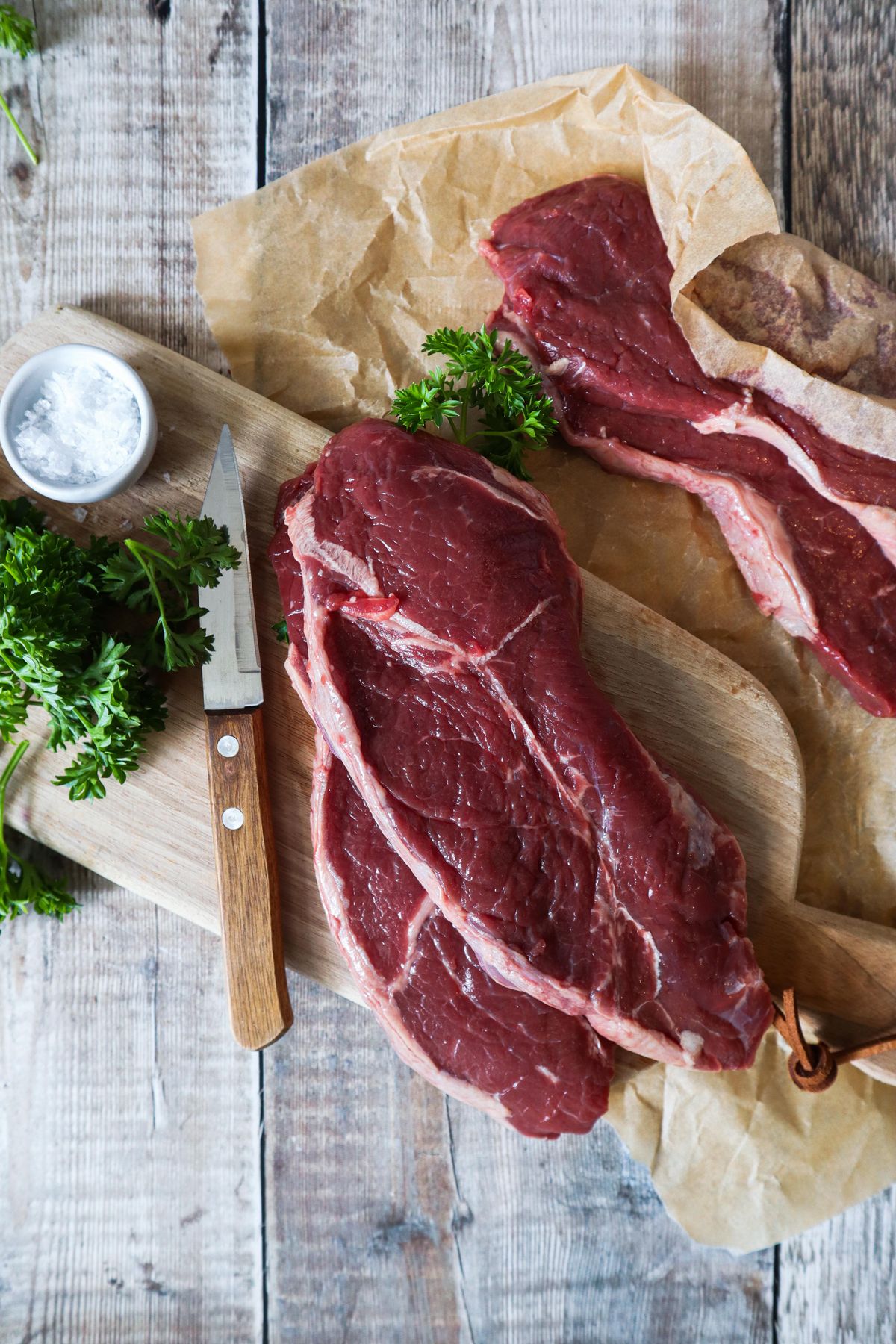
Reverse sear is for thick steaks, 1.5 inches and up. Ribeye, strip, porterhouse, tomahawk, or a thick filet. A thin steak is done before a crust can form, so the method has nothing to work with. Buy the thickest steak in the case, and look for good marbling, because fat is what keeps a long, slow cook juicy.
Salt it early. At least 45 minutes before it goes in the oven, and overnight uncovered in the fridge is better. Salt needs time to dissolve, sink in, and pull moisture back into the meat. A steak salted at the last minute just sits in its own brine. Use kosher salt, a generous pinch on all sides, and nothing else yet. Pepper goes on after the sear, never before, because ground pepper burns at searing heat and turns bitter.
Set the steak on a wire rack set into a sheet pan. The rack matters. It lifts the meat off the pan so hot air circulates underneath, and the steak cooks evenly from all sides instead of stewing in its own juices on the bottom. If you only have a flat pan, flip the steak once halfway through the oven stage.
You also need a thermometer, and this is not the step to skip. An instant-read thermometer is the only way to know when the steak is ready to come out of the oven. Time is a guess. Temperature is a fact.
The slow cook
Set the oven to 200°F if yours goes that low. It is the most gentle cook, though a thick steak can take over an hour. 250°F works fine too. Do not go above 275°F, that is where the gray band starts to creep back in.
Put the steak, on its rack and tray, in the oven with the thermometer probe in the center of the thickest part. Then wait. At 250°F, a 1.5 inch steak takes about 45 to 60 minutes, and a 2 inch tomahawk can take 60 to 90. At 200°F, give it longer. The clock is only a guide. The thermometer decides.
Pull the steak out of the oven 10 to 15 degrees below your final target. The sear will add the rest.
Rare: pull at 105°F, finishes around 120°F. Medium rare: pull at 115°F, finishes around 130°F. Medium: pull at 125°F, finishes around 140°F.
Do not worry about the color at this stage. A steak out of a low oven looks pale and grayish, almost unappetizing. That is normal. The sear is coming, and it does all the color work in about two minutes.
There is a second thing happening in the slow stage that is worth knowing. Muscle fibers hold enzymes that break down protein and tenderize meat, and they stay active while the meat is warming up through about 100°F to 122°F. A slow rise keeps the steak in that window longer, which may add a little tenderness on top of the even cook. It is a small effect, but it is real, and it is one more reason the slow stage earns its time.
Sear it, rest it, cut it
Get the heat as hot as you can. A cast iron skillet on the stove until it just starts to smoke, or the hottest zone of the grill. Oil the steak, not the pan and not the grates. A thin coat of high heat oil on the meat is all it takes, and it keeps the steak from sticking without a puddle of oil burning in the pan.
Sear 60 to 90 seconds a side, then stand the steak up and sear the edges for 15 seconds each. That is all. The steak is already cooked. The sear is only for crust, and any longer and you start rebuilding the gray band you just avoided.
The sear is only for crust. The steak is already cooked.
If you like, add a knob of butter, a crushed garlic clove, and a sprig of thyme to the pan for the last 30 seconds and baste. Then take the steak out. This is the one time the usual resting rules change. A traditionally cooked steak needs a long rest because the outside is much hotter than the center and the heat keeps moving inward. A reverse seared steak went into the pan already warm through, so there is almost no carryover. Two or three minutes on the board, just long enough to plate, is enough. Then cut it.
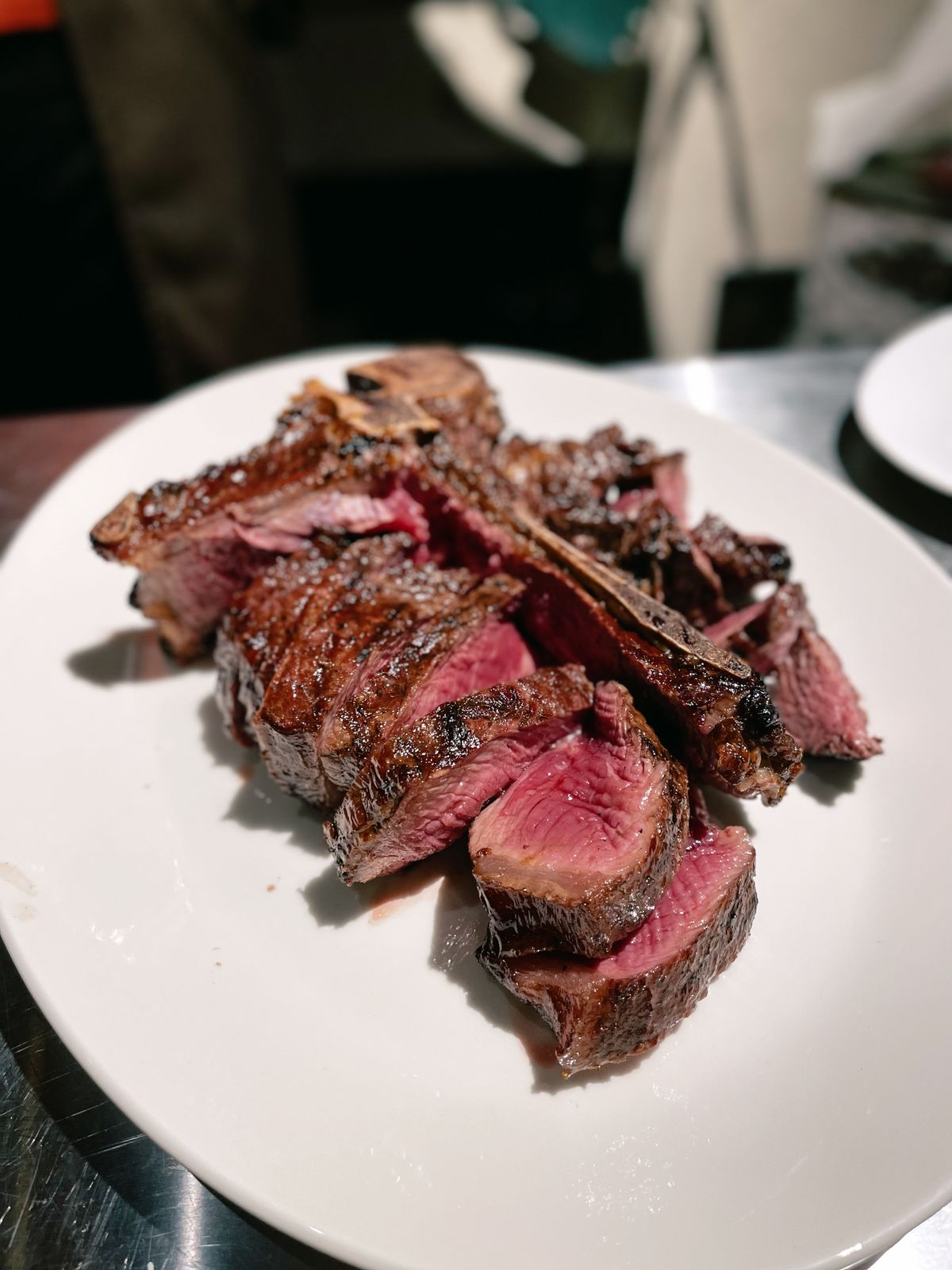
Cut against the grain, in slices about half an inch thick. You will see it right away: pink from edge to edge, with only the thin dark crust at the outside. That is the whole payoff, and it is the reason to cook a steak this way. If you want a sauce, the pan you just seared in has fond in it, and a pan sauce takes five minutes.
What not to do
Do not use a thin steak. Under 1.5 inches, the sear alone cooks the center past medium before a crust forms. Save this method for the thick cuts and cook thin steaks hot and fast instead.
Do not skip the thermometer. Guessing the pull temperature is how a reverse sear turns into a well done steak with extra steps. The whole method runs on one number.
Do not set the oven too hot. At 350°F and up, this is not a reverse sear anymore, it is just a roast, and the gray band comes back.
Do not sear it for three minutes a side. A long sear is a second cook. Sixty to ninety seconds is the sear. If the crust is not dark enough, the pan was not hot enough, not the sear too short.
Do not pepper it before the sear. Pepper burns at searing heat and turns bitter. Salt before, pepper after.
Do not oil the grates. Oil the steak. Oil on a hot grate just burns and smokes, and it does nothing for the crust.
A gray band is not bad luck. It is a steak that met high heat too early.
The short version
Thick steak, salt it early, wire rack on a sheet pan, low oven, 200°F if yours goes that low, 250°F is fine, never above 275°F, until the center is 10 to 15 degrees below target, then a ripping hot sear for 60 to 90 seconds a side. Rest two minutes, cut against the grain. Low oven, hot sear, pink from edge to edge. That is the whole method.
Questions and answers
What is reverse sear? It is a two step method for thick steaks: cook the steak low and slow in the oven first, until the center is 10 to 15 degrees below your target, then sear it fast on ripping hot cast iron or a grill for about a minute a side. The oven cooks the steak evenly, and the sear only builds the crust.
What temperature should the oven be for reverse sear? 200°F if your oven goes that low, 250°F works fine, and never above 275°F. Pull the steak 10 to 15 degrees below your final target: 105°F for rare, 115°F for medium rare, 125°F for medium.
Does reverse sear work on thin steaks? No. A steak under 1.5 inches thick cooks through during the sear alone, so the low oven stage has nothing to do. Use this method on thick ribeyes, strips, porterhouses, and tomahawks, and cook thin steaks hot and fast.
How long does reverse sear take? A 1.5 inch steak takes about 45 to 60 minutes in a 250°F oven, and a 2 inch tomahawk can take 60 to 90 minutes. Time is only a guide. The thermometer decides when the steak comes out.
Do I need to rest a reverse seared steak? Only for two or three minutes. A traditionally cooked steak needs a long rest because the outside is much hotter than the center. A reverse seared steak is already warm all the way through, so there is almost no carryover heat left to move. Rest it just long enough to plate.
Should I bring the steak to room temperature first? It helps, but it is not the step that matters here. The low oven does the evening out. If you want the full picture on tempering, read the post on whether steak needs to come to room temperature.
Can I reverse sear on the grill instead of a pan? Yes. Cook it in the oven the same way, then finish it on the hottest part of the grill. Oil the steak, not the grates, and keep it moving so it does not stick. If your steak has ever stuck to the grill, the fix is in the post on why steak sticks to the grill.
Tools for this post: instant-read thermometer, 12-inch cast iron skillet, 12-inch stainless skillet, and Anova sous vide cooker. See all the tools I use on my Chef Recs page.
As an Amazon Associate I earn from qualifying purchases. Some links are affiliate links, and I may earn a commission if you buy through them, at no extra cost to you.
Andres Dangond is an executive chef and culinary consultant whose twenty years cover every corner of the industry: trained at Alinea and L2O in Chicago, chef owner of Alvecino in Bogotá, executive chef and partner at The Cut in Orange County, expedition cooking in the Alaskan wilds, and nearly a decade as Executive Chef and Director of Culinary Development at Lynx Grills under Middleby, alongside serving as the U.S. Brand Ambassador for Josper. He has spent twenty years in professional kitchens, from Alinea in Chicago to a decade running culinary development at Lynx Grills, and he still brings a thick steak up slow before it ever meets high heat.


Comments