Flat Top Heat Zones: Run a Griddle Like a Range, Not a Frying Pan

Updated: 6 days ago

Direct answer: A flat top is a range with no pots on it. The cooks who get the most out of one never run it at a single temperature. They build zones: one area hot enough to sear, one area at a steady working temperature for vegetables, pancakes, and eggs, and one cool area where finished food holds without cooking further. Set the zones before the first item goes down, cook everything by moving food across the surface instead of turning knobs mid-service, and a whole meal for a group finishes at the same moment instead of in relays.
Set the zones before the first item goes down
Why one temperature fails
A griddle at one setting forces a bad choice. Hot enough to sear a smash burger or a steak, and it scorches eggs, burns garlic, and turns onions bitter before they sweeten. Gentle enough for eggs, and proteins steam in their own juices instead of browning. Restaurants do not solve this with skill alone. They solve it with geography. A diner line cook has run zones on the same steel for a century: the difference between a short order cook and a home cook fighting a new flat top is almost entirely where things sit on the surface.
There is a second reason, and it is physical. Cold food is a heat sink. A pile of cold burgers dropped on one spot pulls that spot's temperature down hard, and the steel around it is what pays the heat back. If the whole surface started at one temperature, the searing spot is now the coolest spot you own. Zones give you somewhere untouched and still hot to move to.
The three zones, and what lives in each
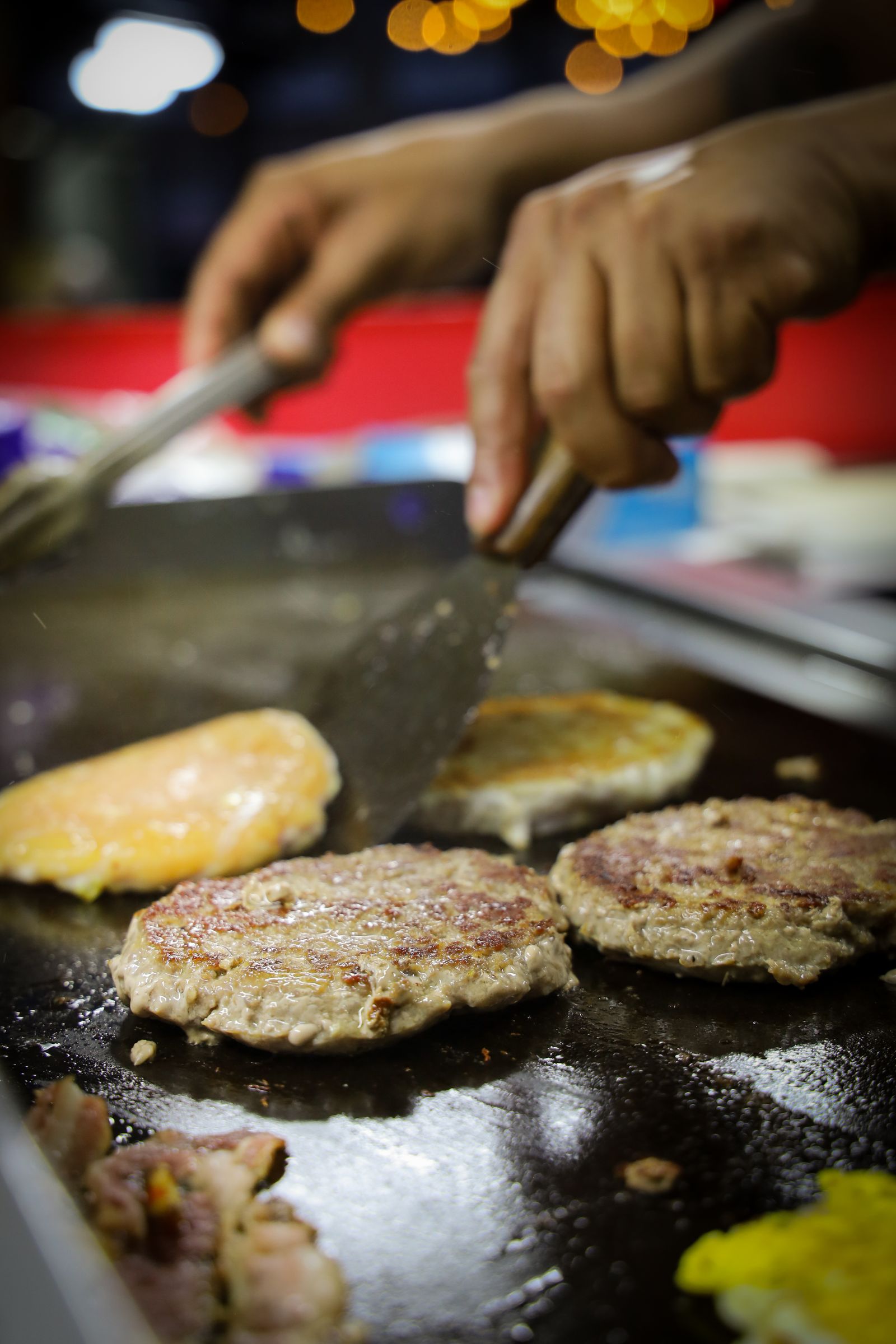
The searing zone, roughly 450 to 500 °F. Steaks, smash burgers, scallops, shrimp, anything that needs a crust in the first minute. Food goes here first, gets its color, and leaves. Almost nothing finishes here. It is the flat top version of the choice I broke down in infrared vs traditional grill burners: intense direct heat is a starting move, not a cooking method for the whole item.
The working zone, roughly 350 to 400 °F. The busiest real estate on the top. Onions and peppers, fried rice, chicken, hash browns, pancakes, quesadillas. Enough heat to brown steadily, enough forgiveness to hold a conversation while it cooks.
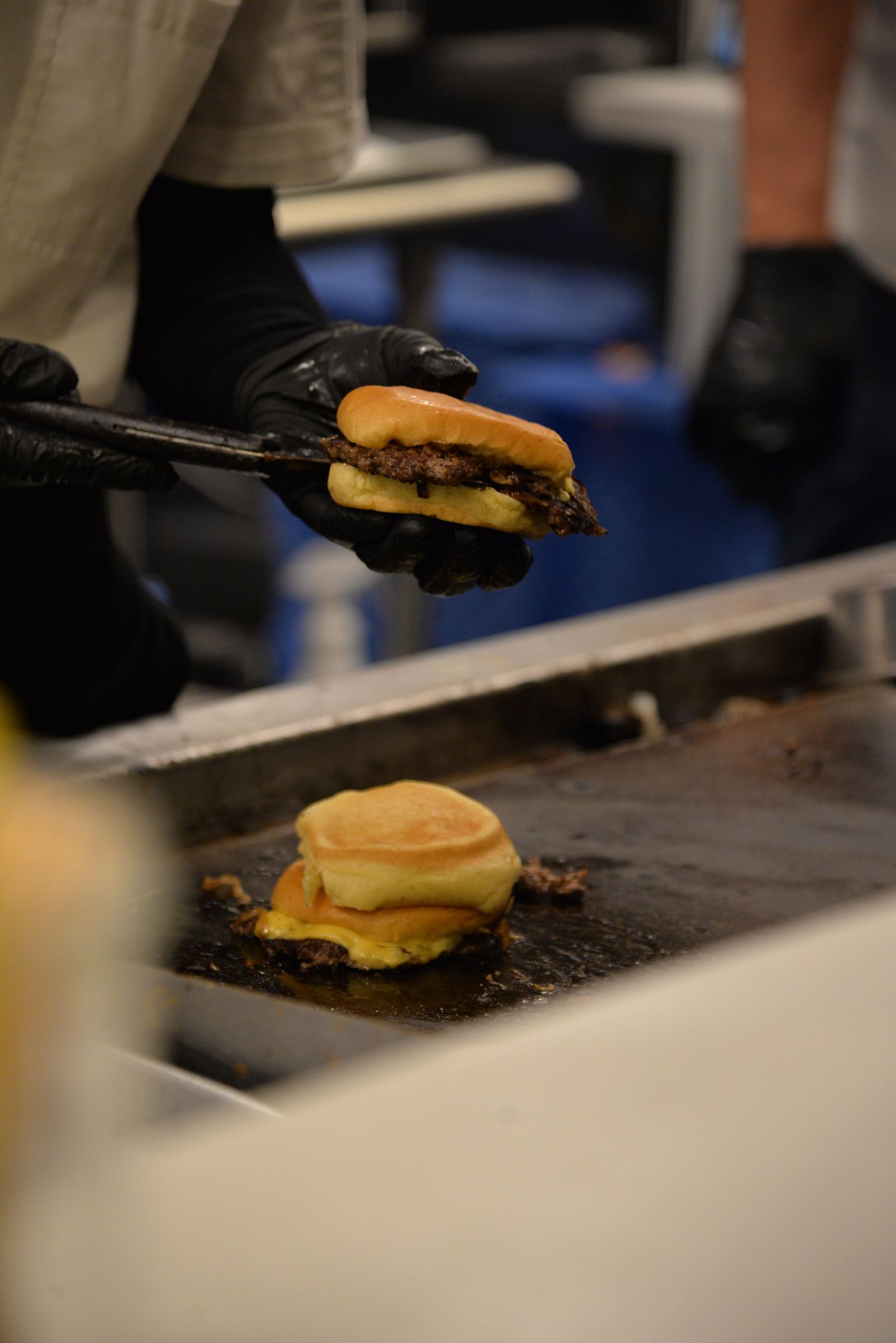
The holding zone, roughly 225 to 300 °F. Finished food waits here without cooking further: bacon already crisp, burgers resting under cheese, tortillas and buns warming, eggs for the person who is always late. On a two-burner top this is often a burner turned off entirely; the steel holds enough residual heat to keep food warm for a long time.
Those numbers are surface temperatures, read with an infrared thermometer pointed at the steel, not the knob setting. Knobs lie in a friendly way: they tell you burner output, not what the surface did with it, and wind, cold food, and a thick plate all change the answer.
Two kinds of flat top, two ways to build the zones
Rectangular multi-burner tops build zones left to right. Each burner heats a strip of steel, so you set the burners differently: high on one end, medium in the middle, low or off on the other end. The strips bleed into each other a little, which is useful; the boundary between zones is a gradient you can park food on, not a wall.
Round tops build zones center out. The EVO Affinity I have demonstrated is the clearest example: a round steel surface heated by separate inner and outer burners, each with its own knob, with a manufacturer stated surface range of 225 to 550 °F across two independently controlled zones. Run the center hot and the rim gentle and you get a searing bullseye with a built-in holding ring around it. Food that is done simply migrates outward. It is the French top idea, which I will get to in the range post, rebuilt for a griddle: control by position, not by knob.
Either way, the discipline is the same. Preheat the whole surface first so the steel is heat-soaked and stable, then set your zones, then wait a few minutes and read the surface before food goes down. Zones built on a half-heated plate drift for the first ten minutes of cooking, which is when most flat top meals go wrong.
A breakfast, run in zones
This is the meal that teaches the system, because everything in it wants a different temperature and the same finish time.
1. Bacon and sausage go down first, on the working zone. They render slowly, and their fat becomes cooking medium for everything after. 2. Hash browns go onto the searing edge of the working zone, pressed flat, and are left alone. Potatoes reward patience and punish stirring. 3. As the meats finish, they move to the holding zone. Nothing leaves the top, nothing gets cold, nothing needs a warm oven. 4. Eggs go last, on the gentlest heat you have, ideally a section where the burner is low or off and the steel is coasting. Eggs on a searing zone are not a technique problem a fast spatula can fix. 5. Buns and tortillas warm in the holding zone while the eggs set. Everything comes off within a minute of everything else.
Reverse the order and you get the usual home result: perfect eggs going cold while the bacon is still raw in the middle.
The mistakes I see at demos
Crowding the searing zone. A crust needs space and dry steel. Food packed edge to edge steams, and no burner setting fixes steam. Cook in two batches and hold the first batch in the holding zone; that is what it is for.
Chasing temperature with the knobs. Every knob change takes minutes to show up in the steel. Moving the food six inches takes one second. Zone cooking means the spatula is the thermostat.
Never reading the surface. One infrared thermometer reading before the first item goes down prevents most flat top failures. After a few sessions you will read the surface by the way oil shimmers and water dances, but earn that by checking numbers first.
Cleaning zones away. Scrape between foods, especially after anything sugary or marinated, or the next item cooks on a layer of carbon and picks up bitter flavors that get blamed on the heat.
Zone cooking means the spatula is the thermostat
Questions I get about flat top zones
How many zones do I actually need? Three is the working answer for a meal with mixed foods: sear, work, hold. For a single food in quantity, two is enough: a cooking zone and a holding zone, so batch one stays hot while batch two cooks.
Can I build zones on a single-burner or stovetop griddle? Yes, with a gradient instead of set zones. The steel over the burner runs hottest and the far corners run coolest, whether you planned it or not. Map it once with an infrared thermometer, or with a row of bread slices toasted as a test, and then use the map on purpose.
Why did my searing zone stop searing halfway through? Heat debt. A large load of cold food pulled more heat out of that section than the burner could replace during the cook. Give the steel a minute empty to recover between batches, or move the next batch to a fresh hot section. Thick steel recovers slower but also loses less; thin steel does the opposite. Both are manageable once you know which you own.
---
A flat top rewards the cook who thinks in places instead of settings. Build the zones first, and the surface stops being one big frying pan and becomes what it was always supposed to be: a whole range, with no pots in the way. This is the equipment layer I teach in trainings and demonstrate at events: not which surface to buy, but how the one you have actually cooks.
Tools for this post: Infrared thermometer and High-temp silicone spatula. See all the tools I use on my Chef Recs page.
As an Amazon Associate I earn from qualifying purchases. Some links are affiliate links, and I may earn a commission if you buy through them, at no extra cost to you.
About the author
Andres Dangond is an executive chef and culinary consultant whose twenty years cover every corner of the industry: trained at Alinea and L2O in Chicago, chef owner of Alvecino in Bogotá, executive chef and partner at The Cut in Orange County, expedition cooking in the Alaskan wilds, and nearly a decade as Executive Chef and Director of Culinary Development at Lynx Grills under Middleby, alongside serving as the U.S. Brand Ambassador for Josper. He consults on menu and recipe development, trains chefs and owners on cooking equipment, and works as a demo and event chef for equipment brands nationwide.
Sources drawn on for this post: EVO Affinity manufacturer specifications (dual inner and outer burners with independent controls, two temperature zones, surface range 225 to 550 °F), verified Oct 21, 2026 from EVO product listings; the author's decade of flat top demonstration and line cooking experience for all technique and temperature guidance.


Comments