Infrared vs Traditional Grill Burners: Two Different Ways to Cook, Not a Better and a Worse

Direct answer: A traditional burner cooks your food with hot air. An infrared burner cooks it with radiant energy, the way the sun warms your skin on a cold day. That single difference explains everything else: infrared is faster, hotter, and more precise for searing, with fewer flare-ups; traditional burners are more forgiving, better for gentle and indirect cooking, and cheaper to maintain. Neither replaces the other, which is why serious grills, including the Lynx models I demonstrated for a decade, put one infrared burner next to conventional burners instead of choosing.
How each burner actually cooks
A traditional gas burner is a convection machine. The flame heats metal, ceramic briquettes or a radiant tray, and those heat the air inside the grill; the moving hot air cooks the food. It works, but air is a slow, indirect messenger. Turn the knob and the temperature drifts up or down over minutes. Gusts of wind push the heat around. Where the air pools, you get hot spots.
An infrared burner removes the middleman. Gas burns through a burner element perforated with thousands of tiny ports; the element itself glows red and radiates infrared energy straight at the grate and the food. One correction people get wrong constantly, including in retailer copy: the Lynx Trident is not a ceramic plate burner. Plenty of infrared burners on the market are ceramic, and Lynx's own manual uses the phrase "ceramic element" loosely, which is where the mix-up starts, but the Trident itself has no ceramic in it. What it shares with the ceramic designs is the principle: a glowing perforated surface radiating directly at the food. Almost no hot air is involved. Lynx's Trident infrared burner, the one I cooked on at hundreds of demos, is rated at 23,000 BTU and is genuinely variable from about 300 °F to 1,000 °F, and the response to the knob is close to instant because nothing has to heat up or cool down in between. That range is the part most people miss: infrared does not mean full blast only. A good infrared burner turned down is a controlled radiant heat source. A cheap one with two settings is a branding exercise.
Where infrared wins
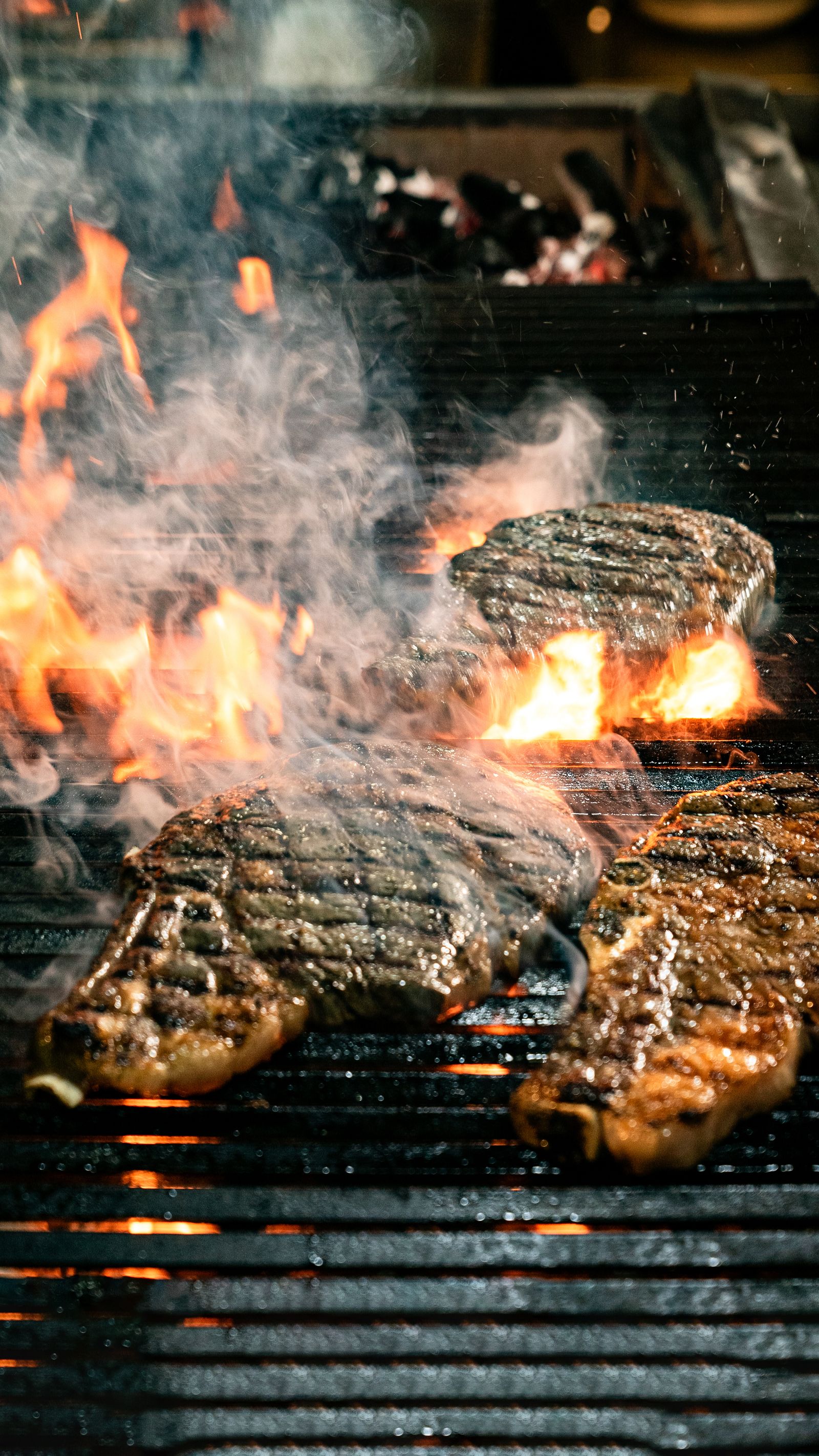
Searing.Nothing else on a residential grill builds a crust like a radiant burner at full power. The surface of a steak hits Maillard temperatures in seconds, and because the cook is short, the interior stays where you put it. This is the burner steakhouses are built around.
Flare-ups.On a conventional burner, dripping fat hits open flame and ignites. On an infrared plate, drippings land on a surface hot enough to vaporize them on contact; they come back up as smoke and flavor instead of a fire you have to manage.
Speed and wind.An infrared burner is ready in three to five minutes and barely notices wind, because radiation does not blow sideways. A conventional grill on a windy evening is a negotiation.
Delicate food at low settings.This surprises people. A variable infrared burner at 300 to 400 °F chars a halved romaine or a piece of fish with direct radiant heat without the drying blast of convection. I demonstrated exactly this with the Trident for years: char on the surface, structure intact.
Where traditional burners win
Forgiveness.Hot air is a buffer. A distracted minute on a conventional burner costs you little; a distracted minute over infrared at 900 °F costs you the crust and possibly the steak. Infrared demands attention, especially while you are learning your burner.
Low, slow, and indirect.Ribs, whole chickens, big roasts that need an hour of gentle, even heat: convection cooking with the lid down is the right tool. You can do it beside an infrared burner that is off, using the conventional side, which is again the hybrid answer.
Maintenance and cost.A tube or cast burner is simple, cheap, and tolerant of abuse. An infrared burner is a precision part: those thousands of tiny ports clog with grease and marinade, especially if food goes over the burner before it is fully preheated and glowing, and water is its enemy while it is hot (Lynx's manual is explicit: never use water to control a flare-up over a Trident, and minimize spills on it). Replacement costs real money. Run an infrared burner at full power for five minutes after cooking and it burns itself clean; skip that habit and you shorten its life.
The hybrid answer, and how to cook on it
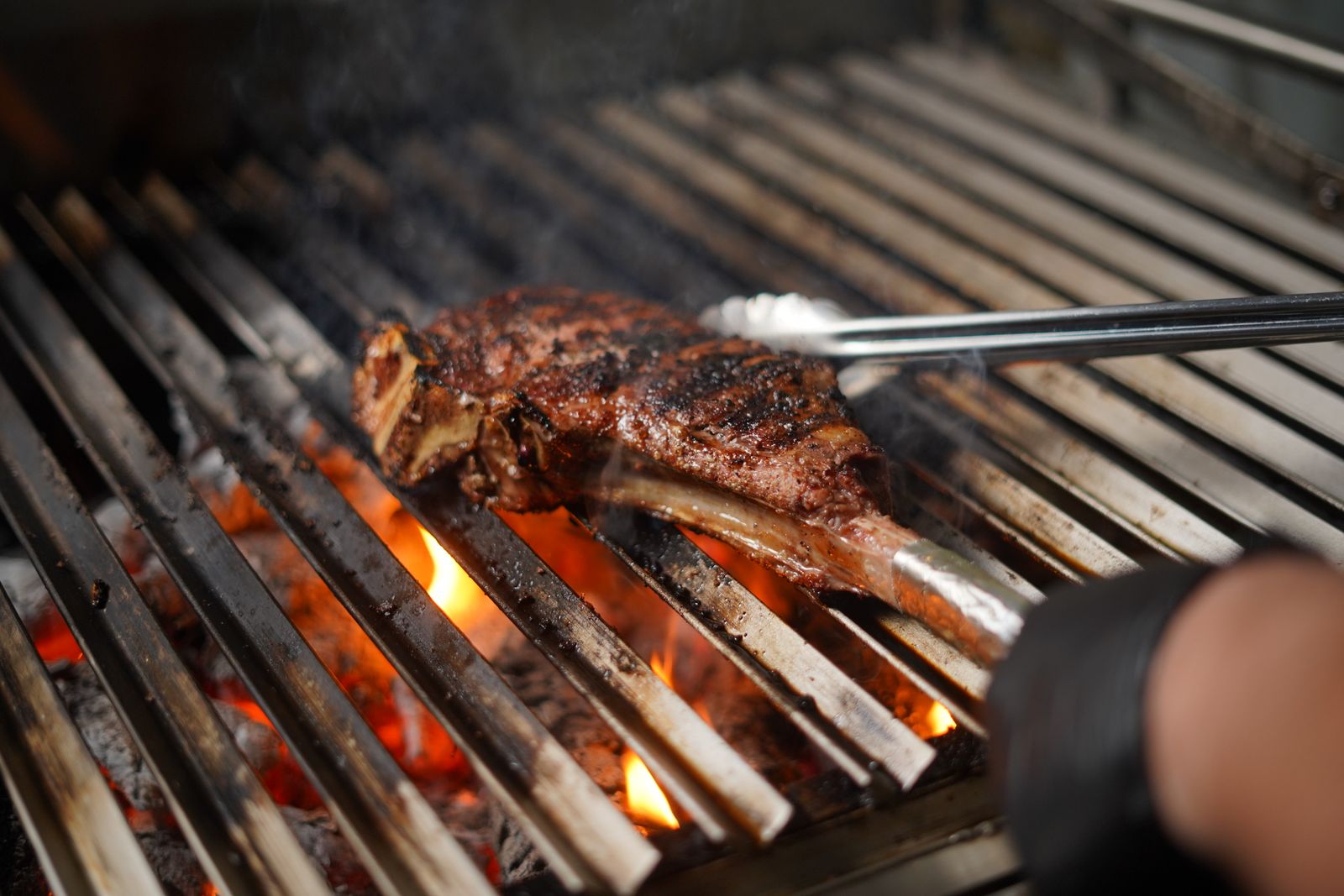
Every grill I spec for a client or a demo kitchen pairs one infrared burner with conventional burners, and the technique follows the equipment:
1. Sear on the infrared burner, one to two minutes a side for a thick steak. 2. Move the food to the conventional side, lid down, to finish to temperature in gentle convective heat. 3. Rest it properly. (And per the pepper rule from my kitchen: the pepper goes on after all of this, never before the sear. See why black pepper burns when you sear it.)
It is the same division of labor as a restaurant line, where the broiler marks and the oven finishes. One burner for violence, one for control. If you are buying a grill with a single burner type and you cook everything from salmon to brisket on it, buy conventional: it covers more ground with fewer disasters. If steaks and searing are your religion, the infrared burner is not a gimmick, it is the tool built for that job.
Questions I get about infrared burners
Does infrared dry food out? The opposite, when used correctly. Because the cook is short and the heat is direct, the surface sears before the interior gives up its moisture. Food dries out on infrared when people cook at full power for conventional-burner times.
Is infrared safe for vegetables and fish? Yes, at low settings on a variable burner. Peppers, asparagus, romaine, scallops and firm fish are excellent on radiant heat. On a fixed high-output burner with no low range, they are a race you will lose.
Why did my infrared burner stop glowing evenly? Clogged ports, almost always. Grease and sugary marinades carbonize in the tiny ports, and food dripping onto a burner that was not fully preheated is the usual cause. The five minute full-power burn-off after cooking prevents most of it; a badly clogged burner is a service call, not a wire brush job, because aggressive cleaning damages the precision surface.
---
Burners are not features, they are cooking methods sharing one box. Learn which method a food wants and the grill stops being a compromise. This is the equipment layer I teach in trainings and demonstrate at events: not which grill to buy, but how the machine you have actually cooks.
About the author
Andres Dangond is an executive chef and culinary consultant whose twenty years cover every corner of the industry: trained at Alinea and L2O in Chicago, chef owner of Alvecino in Bogotá, executive chef and partner at The Cut in Orange County, expedition cooking in the Alaskan wilds, and nearly a decade as Executive Chef and Director of Culinary Development at Lynx Grills under Middleby, alongside serving as the U.S. Brand Ambassador for Josper. At Lynx he demonstrated the line including its Trident infrared burners at events and showrooms nationwide. He consults on menu and recipe development, trains chefs and owners on cooking equipment, and works as a demo and event chef for equipment brands nationwide.
Sources drawn on for this post: Lynx product specifications for the Trident infrared burner (23,000 BTU, variable 300 to 1,000 °F) and ceramic briquette radiant system; J. Kenji López-Alt, The Food Lab, on radiant versus convective heat transfer in grilling.


Comments