Gas vs Charcoal at Home, Which One Actually Fits Your Cooking


Direct answer: Pick by time, not by flavor alone. Gas wins on a weeknight because it is fast, steady, and easy to clean. Charcoal earns its time on a weekend when you can tend the fire and enjoy the craft of it. The right grill is the one you will actually light most weeks, and both grills can make deliciously smoky food.
The real difference in one short pass
Gas is a dial. You turn it on, set the heat, and cook. The heat stays steady while you work, and cleanup at the end is short. That steadiness is the whole point of gas at home. It removes the waiting and the guesswork, so dinner stays a weeknight plan instead of a project.
Charcoal is a fire you build and tend. You light it, wait for it to settle into a usable bed, and then manage it as it burns. The heat runs hotter, and you are working with a more primitive fire: burning wood or charcoal, watching it, feeding it, and learning how it behaves. The cost is time and attention. You cannot walk away from it the same way, and you cannot turn it down with a dial when dinner is ready faster than expected.
Neither one is a better grill in general. They are different tools for different days. The mistake is picking the one with the better reputation and then not using it, because it does not fit the days you actually cook.
How smoke is actually made, and how food takes it in
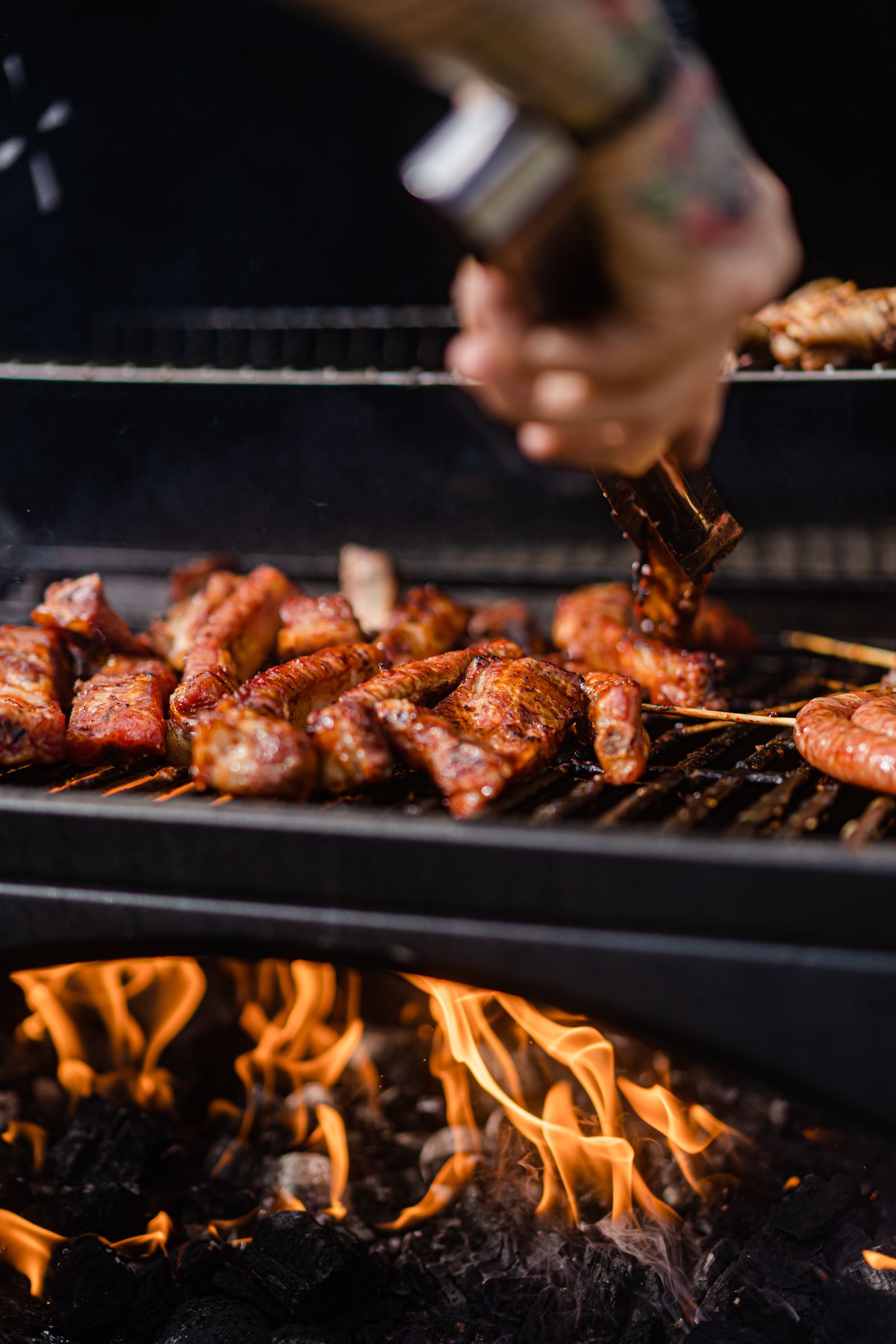
Smoke is not one thing. It is vapor and tiny particles released when organic material breaks down under heat without burning cleanly. Wood and charcoal break down into flavor compounds, fat and juices break down when they hit a hot surface, and both streams rise and swirl around the food.
Food takes smoke in through its surface. Fats and water on that surface grab different smoke compounds, so a moist surface early in the cook picks up smoke more readily than a dry, sealed crust does later. That is why time matters: the longer food sits in smoke, especially with the lid closed, the more smoke flavor it can take in. A quick cook over direct heat gives smoke very little time to do its work, no matter which grill you use.
Both grills make smoke, and both make it the same shared way. When fat and juices drip down, they hit a hot surface, vaporize, and rise back up to coat the food. On charcoal, that surface is the coals. On gas, it is the hot bars or plates above the burners. That dripping vapor is a big part of grilled flavor on either grill, and it is why a gas grilled burger can still taste grilled.
There is one real difference in the fuel itself, and it is worth stating plainly. Gas burns cleanly, mostly to water vapor and carbon dioxide, so the gas flame itself adds almost no smoke flavor. Charcoal is wood that has already been charred, and burning it adds wood derived smoke compounds of its own, on top of the dripping vapor. So charcoal can make more fuel smoke, especially on a longer cook. More smoke is not automatically better smoke. Too much smoke turns bitter, and a clean gas cook with good dripping vapor can taste just as deliciously smoky as a charcoal cook, especially on a quick weeknight cut.
Gas is drip coffee, charcoal is manual espresso
Think of it the way you think of coffee, because the trade is the same.
A gas grill is a fully automated drip coffee machine. Put in great beans, press a button, and you get great coffee, fast, the same way every morning. The machine does the steady work for you. You do not need to know how to control every variable to get a good result, and that is not a weakness. It is the point. With good ingredients and steady heat, convenience gives you a great result with very little friction.
A charcoal grill is the manual coffee experience. You grind great beans yourself with a burr grinder, you work a manual machine, maybe an espresso machine, and you control the grind, the dose, the pressure, and the timing. It takes more time, and you have to know what you are doing to get it right. It is not necessarily better coffee. The same great beans can make great coffee either way. What changes is the craft: more hands on control, more to learn, more room to get it wrong, and more satisfaction when you get it right.
That is the charcoal difference in one image. It is not just a hotter fire. It is a more primitive, more manual way of cooking, tending a fire made of wood and charcoal, and learning how it behaves. If you enjoy that craft, charcoal will reward you. If you just want great grilled food on a Tuesday, the automated route will get you there faster, with the same good ingredients doing most of the work.
The weeknight test
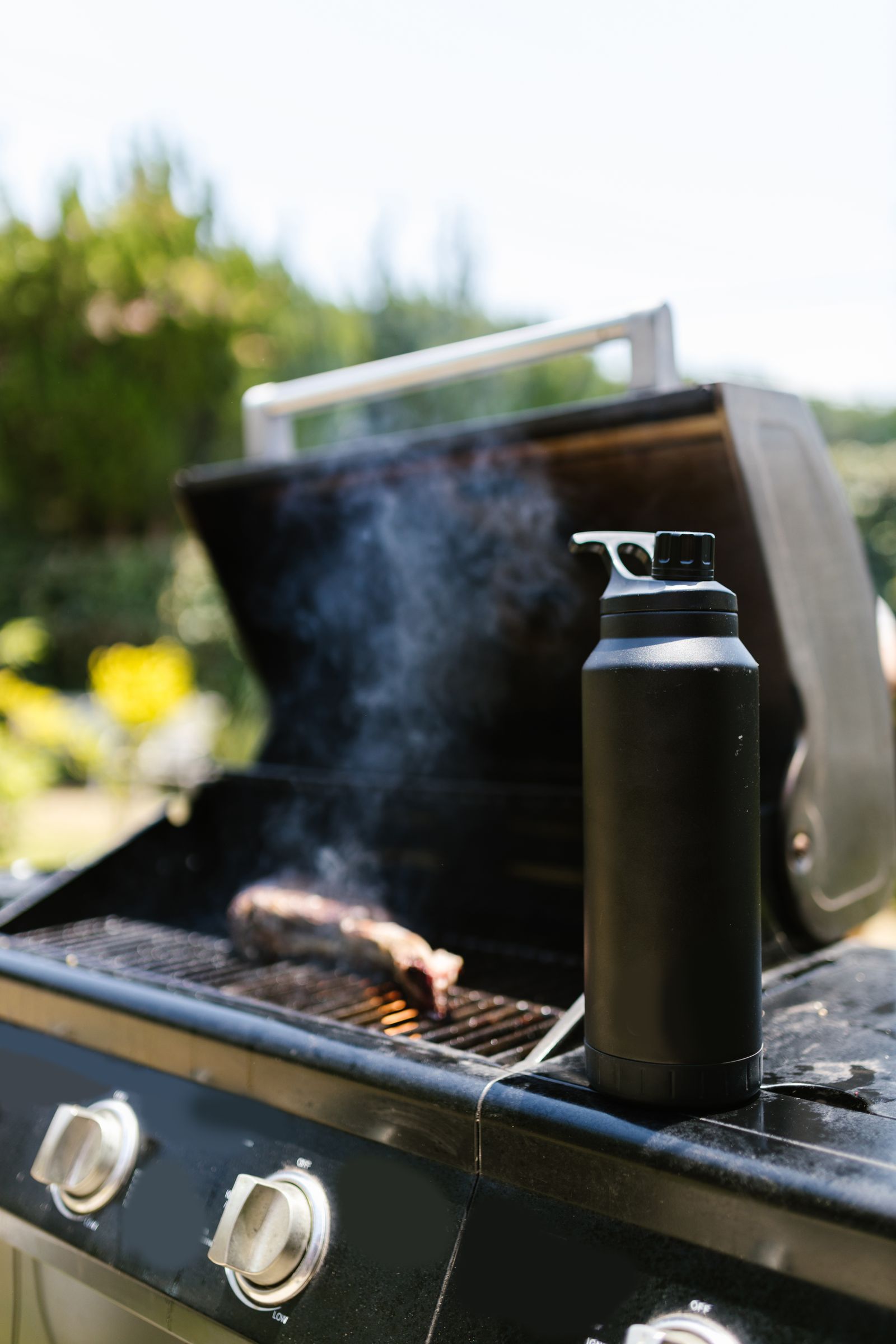
Ask one question first: how long from deciding to cook to food on the grate?
On a weeknight, that time matters more than anything else. Gas is ready soon after you turn it on, and the grate is hot and steady when the food goes down. You can cook a steak, chicken thighs, or vegetables after work without building a fire first, and you can clean up and be done without waiting for coals to burn out. It is the drip coffee version of grilling: quick to set up, easy to get going, and consistent.
Charcoal on a weeknight is possible, but it changes the evening. Lighting and settling take time before cooking starts, and the fire still needs attention after the food comes off. If that time is the reason you would skip grilling altogether, gas is the honest pick for those nights. A grill that stays dark does not cook better food than the one you light.
This is also where the steak sticks post matters, no matter which fuel you use. A clean, fully preheated grate, a dry steak, and patience until the crust releases will do more for the result than the fuel choice alone.
The weekend test
Charcoal earns its place when time is not the constraint. On a weekend, when you can light the fire early, tend it, and cook without rushing, the extra work stops feeling like work. You get a hotter fire for a hard sear, and you get more fuel smoke in the cook, not as an add on but as part of the fire itself.
That is the right time for longer, slower cooks too, and for cooking for a group where the grill stays hot for a while. Tending the fire becomes part of the afternoon, not an obstacle to dinner. If you enjoy that craft, charcoal will give you more of what you grill for.
Gas still works fine on a weekend. It just does not give you the same fire to tend, or the same manual craft. If the weekend cook is the only cook you do, and you like the ritual, charcoal fits. If you grill twice a week and most of those cooks are after work, gas fits better, even on Saturday.
If you only have one
Start with how often you grill, not with what you wish you grilled.
If you grill once or twice a week, mostly on weeknights, pick gas. You will use it more, because the barrier to lighting it is low. More use beats a better fire you rarely build.
If you grill mainly on weekends, have time to tend a fire, and like cooking over live fire, pick charcoal. You will enjoy the process, and the heat, the smoke, and the craft will be part of why you grill at all.
Space matters too. A small patio or a tight balcony changes the choice. Gas is usually simpler in a tight space, with less ash and less to store. Charcoal needs room for the grill, the fuel, and a safe place for hot ash after the cook. Check your building rules before you decide, because some buildings restrict charcoal outright. The best grill for a small space is the one you can store, light, and clean without a fight every time.
If you already own one and rarely use it, do not buy the other one to fix the problem. Change the habit first. Pick the nights you will actually grill, and see if the grill you have fits those nights. Most of the time, the answer is not a new grill. It is a clearer plan for when you cook.
Pick the one you will actually use most weeks
Flavor gets the argument started, but time decides the answer at home. Gas gives you steady heat, a fast start, and an easy finish, like a good drip machine with great beans. Charcoal gives you a hotter fire, more fuel smoke, and a manual craft worth tending, at the cost of time and skill.
So ask it this way: on the weeks you actually cook, which one will you light? Pick that one. The grill you use every week will always beat the grill you admire and leave covered.
That choice also connects to how the heat itself works. The infrared burner post explains why different burners cook differently, and the flat top post shows the same zone thinking applied to a griddle. Fuel is one choice. Heat control is the skill underneath it.
Questions I get about gas and charcoal
How does smoke actually get into the food? Smoke is vapor and tiny flavor particles released when wood, charcoal, fat, and juices break down under heat. Those particles land on the food, and fats and water on its surface grab them. A moist surface early in the cook takes smoke in more readily, and a longer cook with the lid closed gives smoke more time to work. A quick cook gives it very little time, on either grill.
Does charcoal make more smoke than gas? From the fuel itself, yes. Gas burns cleanly and adds almost no smoke flavor on its own. Charcoal adds wood derived smoke on top of the dripping vapor that both grills make. That does not make it automatically better. More smoke can turn bitter, and on a quick cook the difference is small, because dripping vapor does most of the work on both grills.
Can I get smoke flavor on a gas grill? Yes, and it can taste deliciously smoky. Fat and juices dripping onto the hot bars vaporize and rise back up to coat the food, just as they do on charcoal. The smoke is cleaner and less woody than charcoal fuel smoke, but it is real smoke flavor, not a fake version of it.
Is charcoal too much work for a weeknight? It is not too much work in general. It is too much work for a rushed weeknight, when lighting, settling, and tending take time you do not have. Save charcoal for the nights when that time is part of the plan.
What if I only have a small space? Gas is usually the simpler fit, with less fuel to store and less ash to handle. Charcoal needs more room and a safe place for hot ash. Check your building rules first, then pick the grill you can store and clean without a fight.
Tools for this post: Searzall torch and Hibachi grill. See all the tools I use on my Chef Recs page. Some links in this post are affiliate links, and I may earn a commission if you buy through them, at no extra cost to you.
About the author
Andres Dangond is an executive chef and culinary consultant whose twenty years cover every corner of the industry: trained at Alinea and L2O in Chicago, chef owner of Alvecino in Bogotá, executive chef and partner at The Cut in Orange County, expedition cooking in the Alaskan wilds, and nearly a decade as Executive Chef and Director of Culinary Development at Lynx Grills under Middleby, alongside serving as the U.S. Brand Ambassador for Josper. He consults on menu and recipe development, trains chefs and owners on cooking equipment, and works as a demo and event chef for equipment brands nationwide.


Comments